Baby Feeders for Cautious Eaters: A Gentle Way to Explore New Foods
If your baby shies away from new textures, a baby feeder lets them taste and explore at their own speed—safely and independently.
Why Some Babies Need a Slower Path to New Foods
Not every baby lunges for the avocado toast. Some freeze, turn away, or gag at the mere hint of a new texture. That hesitation is normal—but it leaves parents stuck between pushing too hard and offering the same three purees on repeat.
A baby feeder bridges that gap. Your child controls the pace, the pressure, and how much gets through. It is exposure without overwhelm, and for cautious eaters, that makes all the difference.
How a Feeder Builds Food Confidence
The key is autonomy. When a baby holds the feeder themselves, they decide when to bring it to their mouth and how long to keep it there. That sense of control reduces the anxiety that cautious eaters feel around unfamiliar foods.
Small, digestible pieces pass through the mesh or silicone holes—so they taste the real flavor without confronting a texture they are not ready for. Over time, the association between that flavor and something pleasant grows stronger, making the next step toward the actual food less intimidating.
Two Feeders Worth Trying With a Hesitant Eater
Munchkin Baby Feeder, 2 Pack, Coral/Purple
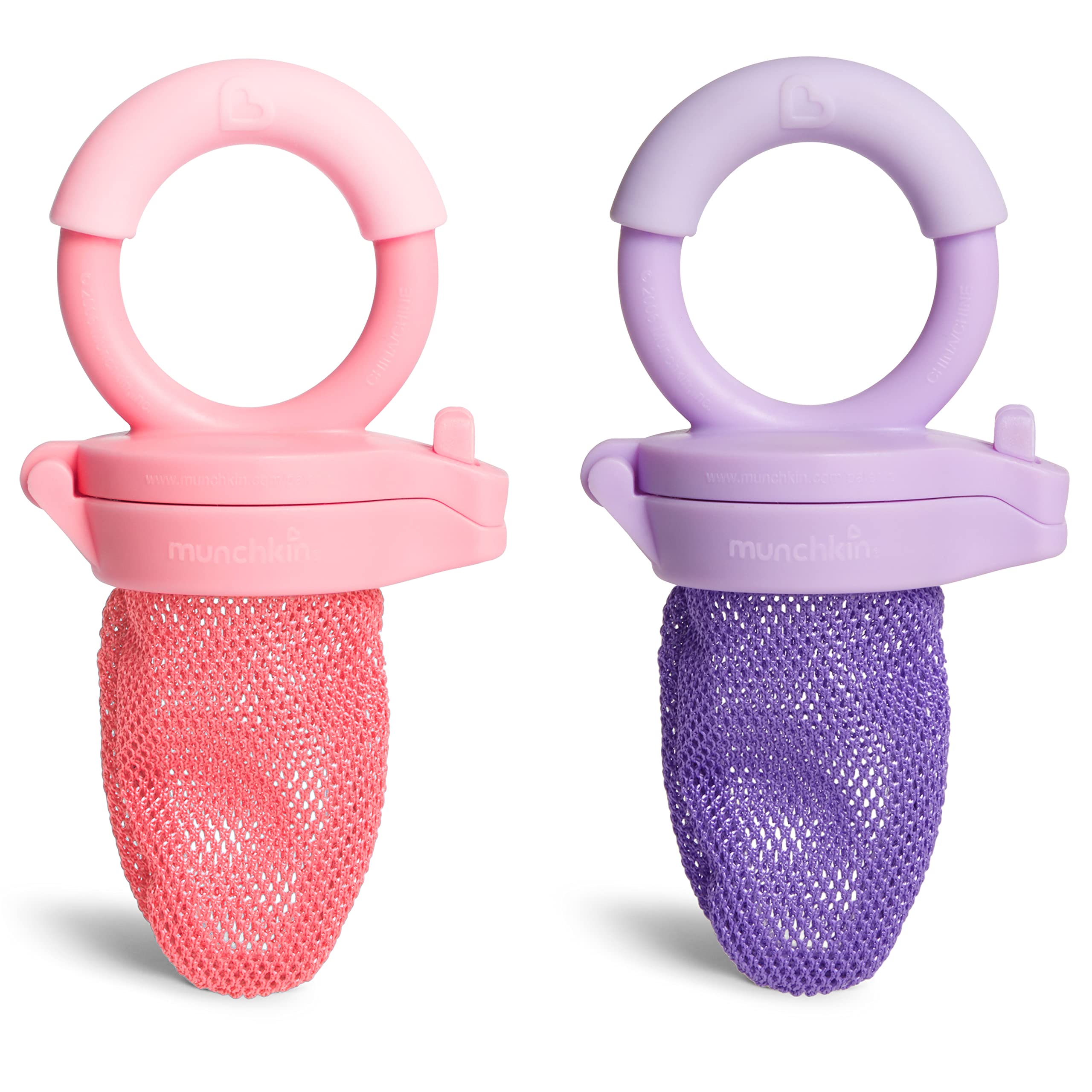
The mesh design of the Munchkin Baby Feeder, 2 Pack, Coral/Purple is surprisingly useful for cautious eaters because it softens food further than silicone does. Bananas, steamed peas, and frozen breastmilk all break down into a fine, almost liquid consistency through the mesh—ideal when your baby is not ready for even small lumps.
The colored mesh resists staining, which matters when you are rotating through beets and sweet potatoes daily. A secure locking mechanism keeps curious fingers from opening the bag mid-chew. Rinse or soak in warm soapy water right after use and scrub with a soft brush to keep things clean.
This budget-friendly two-pack means you can load one while the other dries, keeping the exposure routine going without interruption.
Dr. Brown's Fresh First Silicone Feeder, Mint & Grey, 2 Count
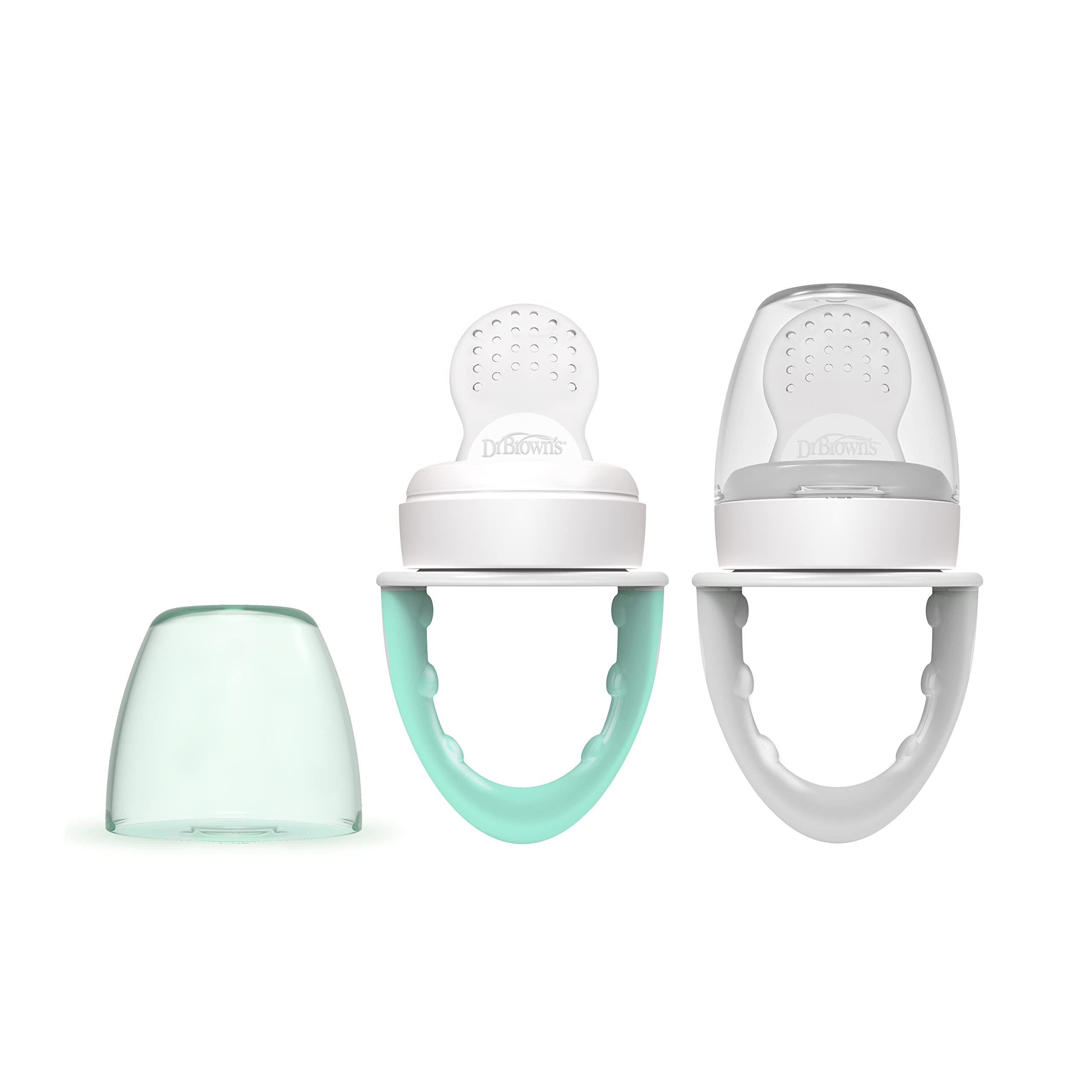
When your cautious eater is ready for a bit more texture, the Dr. Brown's Fresh First Silicone Feeder, Mint & Grey, 2 Count is the logical next step. Its tiny holes let slightly more through than mesh, giving baby a sense of the food's actual consistency while still preventing large pieces from reaching them.
The bulb shape fits smaller mouths comfortably, and the mesh-free design means less food gets trapped in fabric—less mess, easier cleanup, and nothing that might feel strange against sensitive gums. It is dishwasher-safe on the top rack and sterilizer-safe, which simplifies the daily rotation. The bite-resistant silicone holds up to enthusiastic gnawing.
This mid-range two-pack works well as a progression tool once your baby has warmed up to the idea of self-feeding.
A Simple Progression Strategy
For the most cautious eaters, think of these feeders as a two-stage system rather than competing options:
- Stage 1 — Mesh first. Start with the Munchkin feeder and very soft foods. The near-liquid output keeps surprise to a minimum.
- Stage 2 — Silicone second. Once your baby reaches for the feeder eagerly, switch to Dr. Brown's. The slightly firmer texture prepares them for finger foods.
The Verdict
Neither feeder is objectively better—their value depends on where your baby is in the confidence-building process. The Munchkin Baby Feeder, 2 Pack, Coral/Purple excels at the earliest exposure stage, softening everything to a near-puree. The Dr. Brown's Fresh First Silicone Feeder, Mint & Grey, 2 Count shines as a bridge toward real textures and is easier to clean. Used together, they give a cautious eater a gradual, confidence-building path from first tastes to finger foods.
Who This Suits
Parents of babies who gag easily, refuse new textures, or seem overwhelmed by traditional self-feeding. Also helpful for families wanting to introduce allergens like peanut or egg in a controlled way—load a tiny amount into the feeder and let baby set the pace.
Who Should Skip
If your baby eagerly grabs food from the high chair tray and chews without hesitation, a feeder may slow them down unnecessarily. Confident self-feeders do better with direct finger food practice.
Get the Munchkin mesh feeder → | Get the Dr. Brown's silicone feeder →
Related Buying Guides
- Best Baby Feeder for Mess-Free Self-Feeding Practice
- Baby Silicone Placemat Not Staying Put? How to Fix the 5 Most Common Mealtime Mat Problems
- How to Pick a Nursing Cover That Keeps Eye Contact With Your Baby
- Giraffe Baby Laundry Basket Review: Cute Meets Functional in the Nursery
- Need a Replacement Swaddle? Why the Love to Dream Swaddle UP Is the One to Reorder
- Baby Brezza Universal Detergent Soap Tablets Features Explained: What Makes Them the Best Baby Detergent for Bottle Washers