Baby Won't Use Walker? How to Fix Resistance to Push Toys
Troubleshoot why your baby resists their walker. Learn the common causes and how a multi-activity design can encourage walking practice for 6-12 month olds.
Why Your Baby Refuses the Walker
You bought a walker to help your little one practice those first steps, but they push it away, ignore it, or cry when you bring it out. This is frustrating, especially when other babies seem to take to walkers naturally.
The most common reason babies resist walkers is lack of engagement. A plain push toy offers nothing to hold their attention, so they lose interest before building confidence. Babies at this age need sensory variety and immediate rewards to stay motivated during the challenging work of learning to walk.
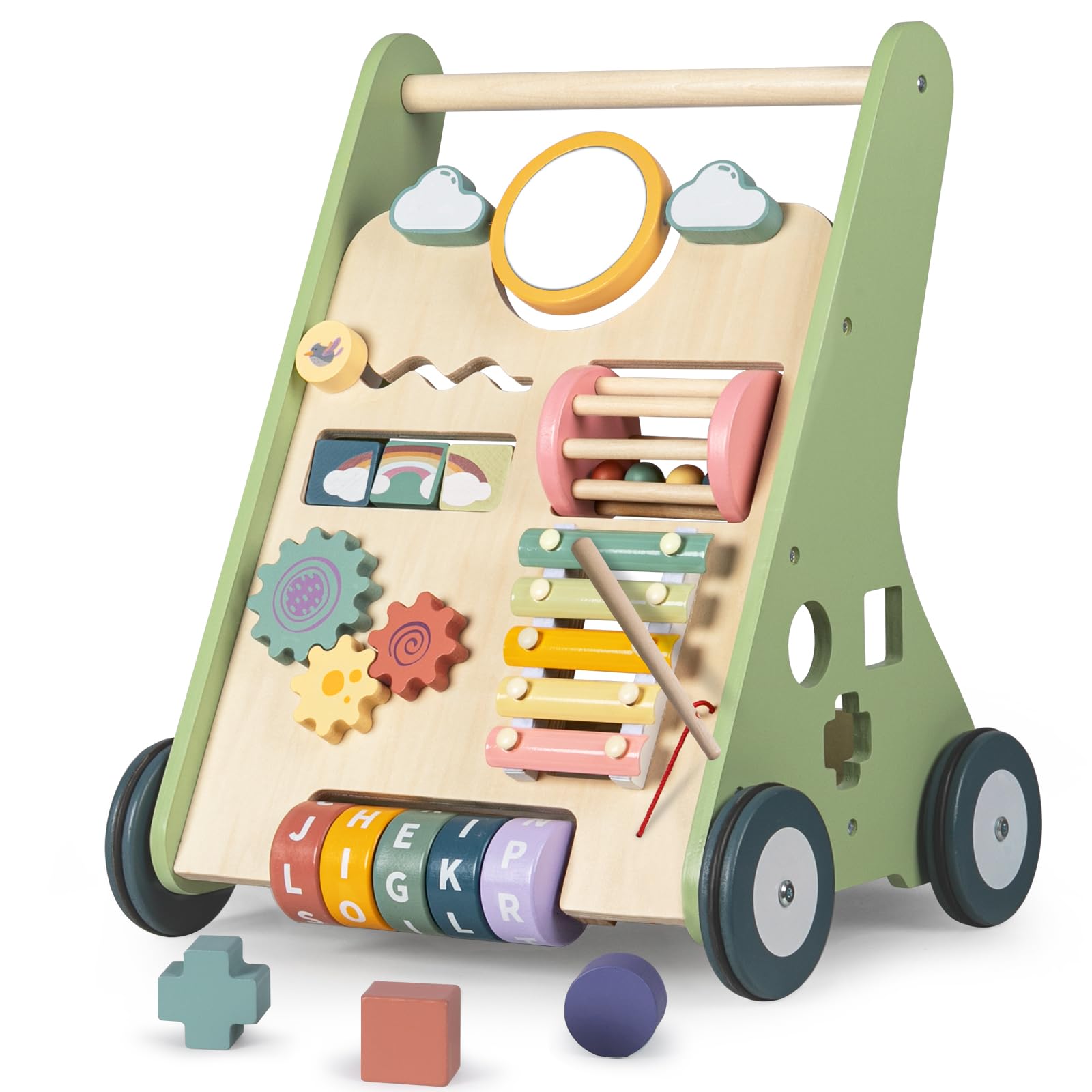
The Multi-Activity Solution
The Bautia Wooden Baby Walker solves this by combining walking support with a built-in activity center. Instead of a bare handle, babies get an interactive panel with a xylophone, rolling letter wheel, flip board, and tracking games.
This design works because it gives babies a reason to approach the walker on their own terms. They come for the toys, stay for the sensory feedback, and naturally begin pushing as they lean in to play. The cognitive engagement makes walking practice feel less like work.
What Makes This Design Work
- Natural wood construction with smooth edges provides safe interaction during wobbly early steps
- Interactive panel develops hand-eye coordination while encouraging forward movement
- Multiple activities hold attention longer than single-function push toys
- Stable base prevents tipping when babies pull up or lean heavily
When This Approach Fits
This walker suits babies 6-12 months who are pulling up on furniture but need motivation to practice walking. It works particularly well for cautious babies who need extra incentive to let go and push, and for curious babies who abandon simple toys quickly.
The activity panel provides value even before independent walking begins, making it useful across several developmental stages rather than just a brief walking-practice window.
When to Try Something Else
If your baby is already cruising confidently and just needs a lightweight push toy for speed, a simpler walker without the activity panel may be less bulky. Babies who are overwhelmed by multiple stimuli might do better with a single-feature design.
Always supervise walker use on flat surfaces. This is a walking-practice tool, not a safety device or seat.
Related Buying Guides
- Is the Bautia Wooden Baby Walker Worth It? Common Questions Answered
- Best Wooden Baby Walker for Learning to Walk: Bautia Montessori Activity Walker Guide
- How to Choose a Safe Montessori Baby Walker for Early Walkers
- Best Baby Walkers Under $70: Top 3 Picks for Learning to Walk in 2026
- How to Help Your Baby Learn to Walk with a Montessori Push Walker
- 3 Best Baby Walkers for Early Development: Wooden, Electronic & Convertible Options Compared