Why Your Baby Won't Use Their Walker: Common Issues and How the VTech Sit-to-Stand Solves Them
Struggling to get your baby interested in their walker? Learn why babies reject walkers and how the VTech Sit-to-Stand Learning Walker's adaptive design encourages natural walking development.
Why Babies Refuse Traditional Walkers
Many parents find their baby shows no interest in a walker, or worse, becomes frustrated and pushes it away. The most common issue is developmental mismatch: traditional walkers often lack floor play options for babies who aren't ready to stand, or they're too lightweight and tip forward when babies pull up on them.
Another frequent problem is boredom. If the walker only serves one function—walking—babies who prefer sitting or crawling have no reason to engage with it. This leads to an expensive toy that sits unused in the corner.
How the VTech Sit-to-Stand Adapts to Your Baby's Stage
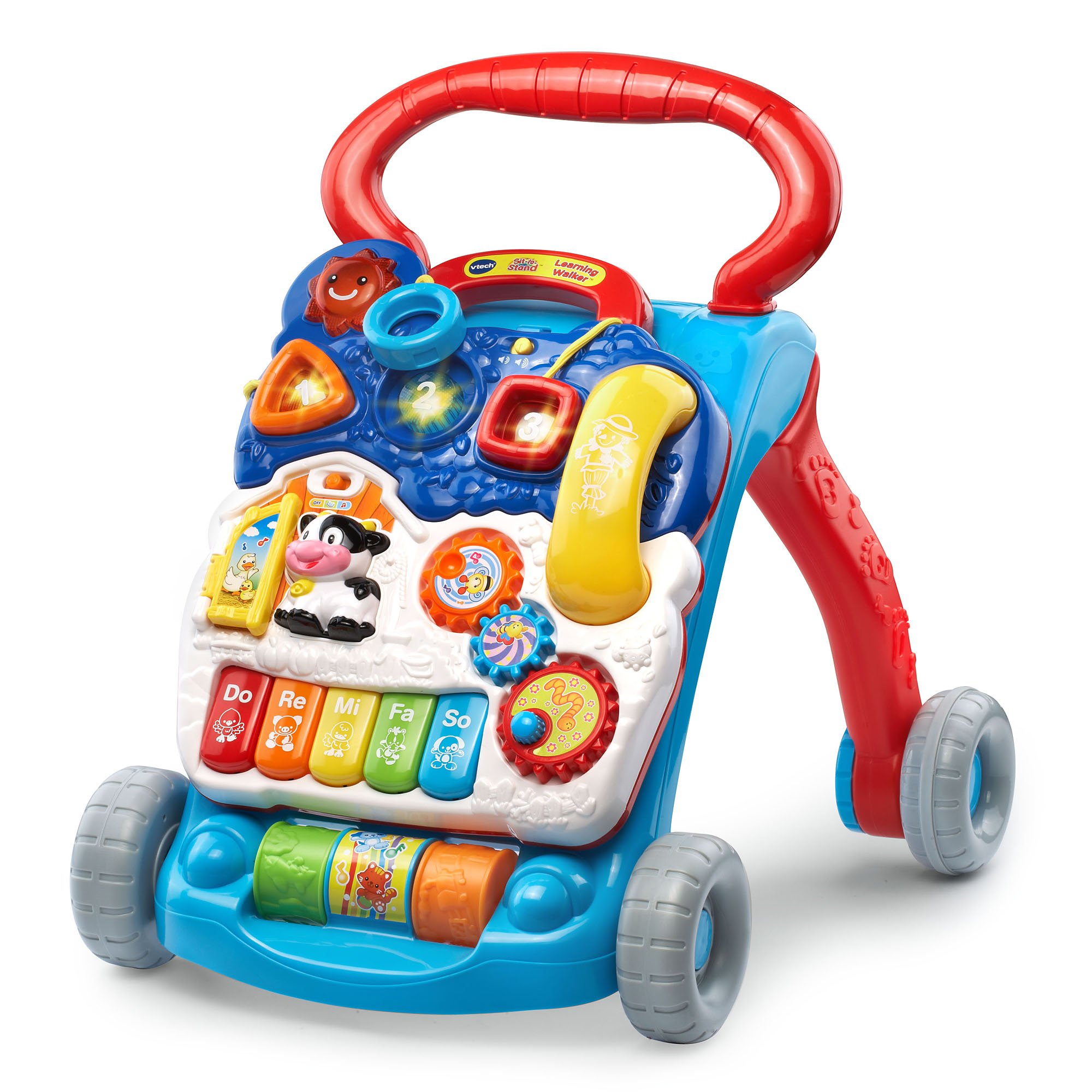
The VTech Sit-to-Stand Learning Walker addresses these issues with a removable activity panel. Babies who aren't walking yet can play with the panel on the floor, exploring five piano keys, three shape sorters, spinning gears, and colorful rollers. This keeps them engaged during the crawling stage and builds the motor skills they'll need for walking.
When your baby is ready to pull up and cruise, you reattach the panel to the sturdy walker frame. The weight distribution is designed to prevent tipping, and the wheels work on both carpet and bare floors. The activity center stays at eye level, motivating your baby to stay upright and take steps.
Who This Walker Works Best For
- Babies 9-36 months transitioning from crawling to walking
- Parents who want one toy that grows with their child
- Households with mixed flooring (carpet and hardwood)
- Families looking for educational features like shape sorting and music
When to Choose a Different Option
This walker may not be ideal if your baby is already confidently walking and needs a ride-on toy instead, or if you have thick, high-pile carpet that makes wheeled toys difficult to push. It also requires 2 AA batteries for the sound features, which some parents prefer to avoid.
What to Check Before Buying
Make sure your baby can sit up unassisted before using the detachable panel for floor play. For walker mode, they should be pulling up on furniture but not necessarily walking independently yet. The product works best when introduced at the right developmental window, typically between 9-15 months for most babies.
Related Buying Guides
- VTech vs Bautia vs Skip Hop Baby Walker: Which Is Best for Your Child?
- VTech Sit-to-Stand Learning Walker Guide: What New Parents Should Know
- Skip Hop Baby Walker Not Moving? How to Fix Speed Control and Wheel Issues
- How to Keep Your VTech Sit-to-Stand Walker Rolling Smoothly
- Skip Hop vs Bautia vs VTech Baby Walker: Which One to Buy in 2026?
- Best Baby Walkers for Learning to Walk: Skip Hop vs Bautia vs VTech Compared