Best Teething Toys for Babies Who Can't Hold Regular Teethers Yet
When your baby's first teeth start breaking through but they can't yet grasp traditional teethers, specialized designs make all the difference. Explore solutions that work with your baby's current developmental stage.
Finding the Right Teether Before Your Baby Can Grip
The first signs of teething often appear months before babies develop the fine motor control to hold onto toys. Heavy drooling, gum sensitivity, and the constant urge to mouth objects create a frustrating challenge: your baby needs relief but can't yet coordinate their hands well enough to keep a teether in place.
Two distinct approaches solve this developmental gap. Wearable teething mittens strap directly onto little hands, keeping soothing textures within constant reach. Easy-grip handheld designs feature shapes specifically engineered for immature grasp patterns. Each addresses early teething from a different angle.
Wearable Solution: Teething Mitten That Stays Put
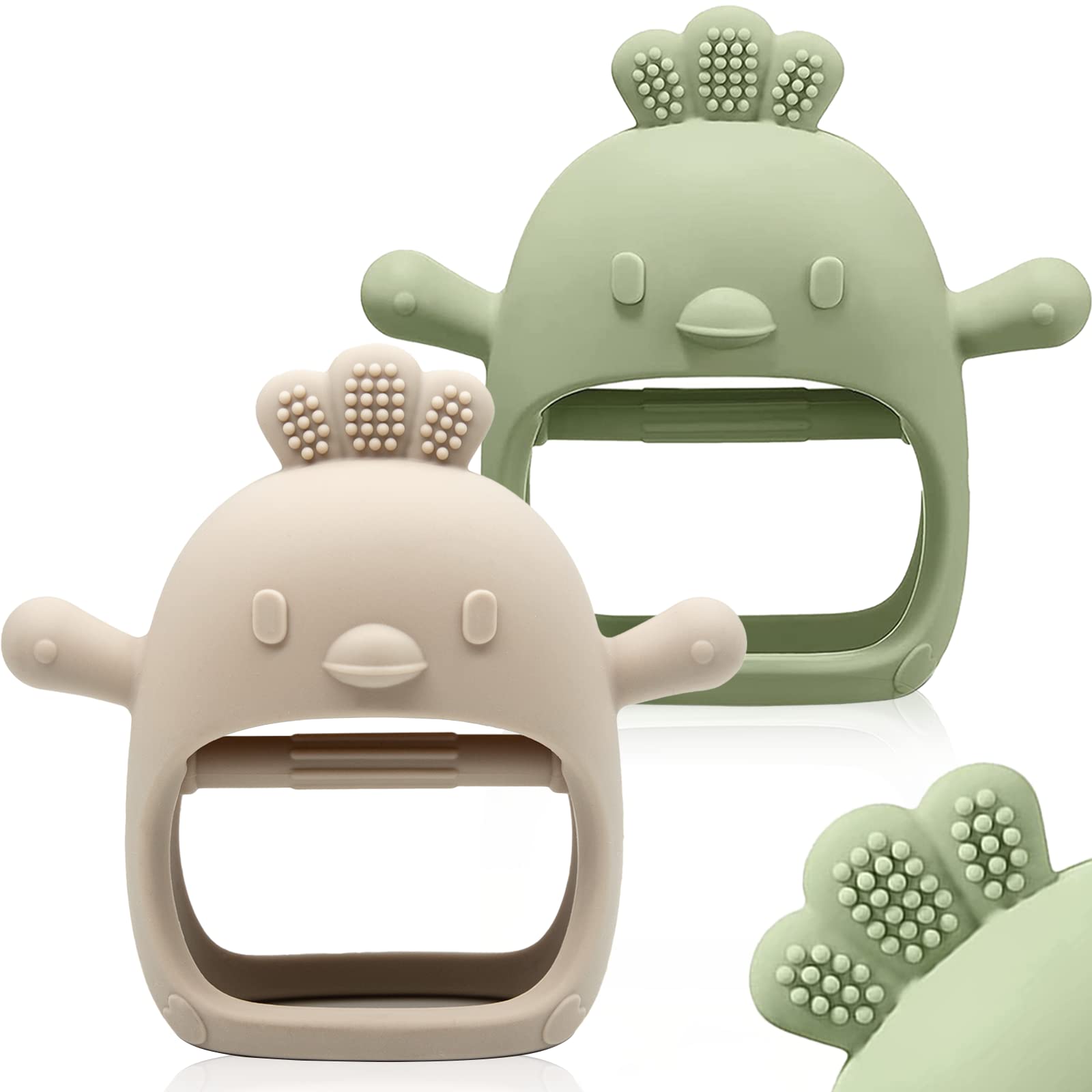
The 2 Pack Baby Teething Toy Silicone Teething Mitten for Babies Over 3 Months eliminates the drop-and-retrieve cycle entirely. This budget-friendly wearable design fits over your baby's hand like a soft glove, with textured bumps positioned right where natural hand-to-mouth movement brings relief.
Key Features
- Stays secured to baby's hand without constant repositioning
- Internal grip bar helps babies learn to grasp while wearing
- Character arms mimic nipple shape for added comfort
- BPA-free food-grade silicone construction
- Dishwasher and freezer safe for easy maintenance
- Two-pack provides backup during cleaning
The wearable format works particularly well during the 3-to-6-month window when mouthing reflexes are strong but intentional grasping remains inconsistent. Babies can self-soothe without parent intervention, and the mitten prevents scratching from sharp fingernails during intense teething episodes.
Grip-Friendly Handheld: Monkey Design With Purpose
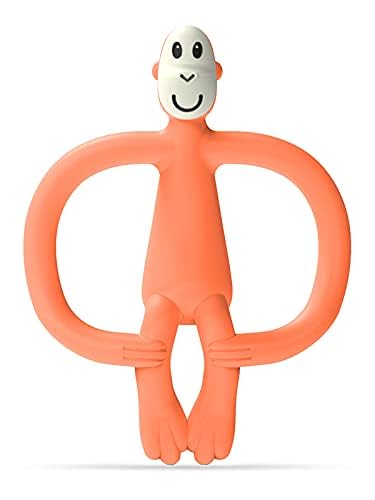
For babies starting to experiment with holding objects, the Matchstick Monkey Silicone Teether & Gel Applicator bridges the gap between full assistance and independent use. Its elongated limbs and lightweight flexible body accommodate clumsy early grasps while delivering targeted gum massage.
Design Advantages
- Multiple grip points accommodate developing motor skills
- Textured bumps on head reach back molars effectively
- Functions as teething gel applicator for precise relief
- Built-in BioCote protection resists odors and staining
- Encourages bilateral hand coordination
- Supports transition to self-feeding skills
The monkey shape isn't just decorative. The extended arms give babies several ways to hold on, while the compact head fits comfortably in small mouths. Parents can apply teething gel to the textured areas, allowing babies to control where soothing happens rather than struggling with direct application.
Comparing Both Approaches
| Feature | Teething Mitten | Matchstick Monkey |
|---|---|---|
| Requires grip ability | No | Minimal |
| Stays in place during sleep | Yes with supervision | No |
| Gel application | Surface only | Dedicated texture |
| Encourages motor development | Internal bar assists | Multiple grip options |
| Cleaning method | Dishwasher, freezer | Dishwasher, boiling, UV |
Making the Right Choice
Both options deliver genuine relief during the challenging pre-grip teething phase. The mitten works best for younger babies who aren't yet attempting to grasp objects and need round-the-clock access without parent involvement. The handheld monkey suits babies showing early grabbing attempts who benefit from practice opportunities alongside immediate comfort.
The Mitten Works Best For:
- Babies 3-5 months who constantly drop traditional teethers
- Preventing hand-chewing and scratching during teething
- Situations where constant supervision isn't possible
- Parents wanting a completely hands-free solution
The Matchstick Monkey Suits:
- Babies 4-8 months developing intentional grasp
- Parents who use teething gels regularly
- Encouraging fine motor skill progression
- Reaching emerging back molars effectively
Consider Skipping If:
- Your baby already holds rattles and toys confidently (standard teethers will work fine)
- You need something for outdoor use where wearables might attract dirt
- Your baby resists anything on their hands or has sensory sensitivities
The Bottom Line
Early teething doesn't have to mean constant frustration for babies who can't yet coordinate their hands. Wearable mittens and intelligently designed grips both address the developmental reality of 3-to-6-month-olds. Your choice depends on whether you prioritize absolute security or gradual skill-building. Either way, you're giving your baby the relief they need during a genuinely uncomfortable milestone.
Related Buying Guides
- Best Baby Feeder for Mess-Free Self-Feeding Practice
- Baby Silicone Placemat Not Staying Put? How to Fix the 5 Most Common Mealtime Mat Problems
- How to Pick a Nursing Cover That Keeps Eye Contact With Your Baby
- Giraffe Baby Laundry Basket Review: Cute Meets Functional in the Nursery
- Need a Replacement Swaddle? Why the Love to Dream Swaddle UP Is the One to Reorder
- Baby Brezza Universal Detergent Soap Tablets Features Explained: What Makes Them the Best Baby Detergent for Bottle Washers