How to Choose the Right Baby Walker: A Parent's Buying Guide
Learn what to look for in a baby walker. Discover key features like removable activity panels, motor skill development, and safety design for your growing baby.
Choosing a Baby Walker That Grows With Your Child
As your baby transitions from crawling to walking, a quality learning walker can make the journey safer and more engaging. The right walker supports motor development while keeping your little one entertained during those crucial months of growth.
What to Look for in a Baby Walker
- Detachable activity panel – Allows floor play before your baby is ready to stand, extending the product's useful life
- Stability features – Wide base and controlled wheel movement help prevent tipping as baby learns balance
- Motor skill builders – Shape sorters, buttons, and gears develop hand-eye coordination and fine motor control
- Dual-surface compatibility – Works on both carpet and hard floors so baby can practice anywhere
- Sensory engagement – Lights, sounds, and textures keep baby interested while building cognitive skills
A Walker That Checks All the Boxes
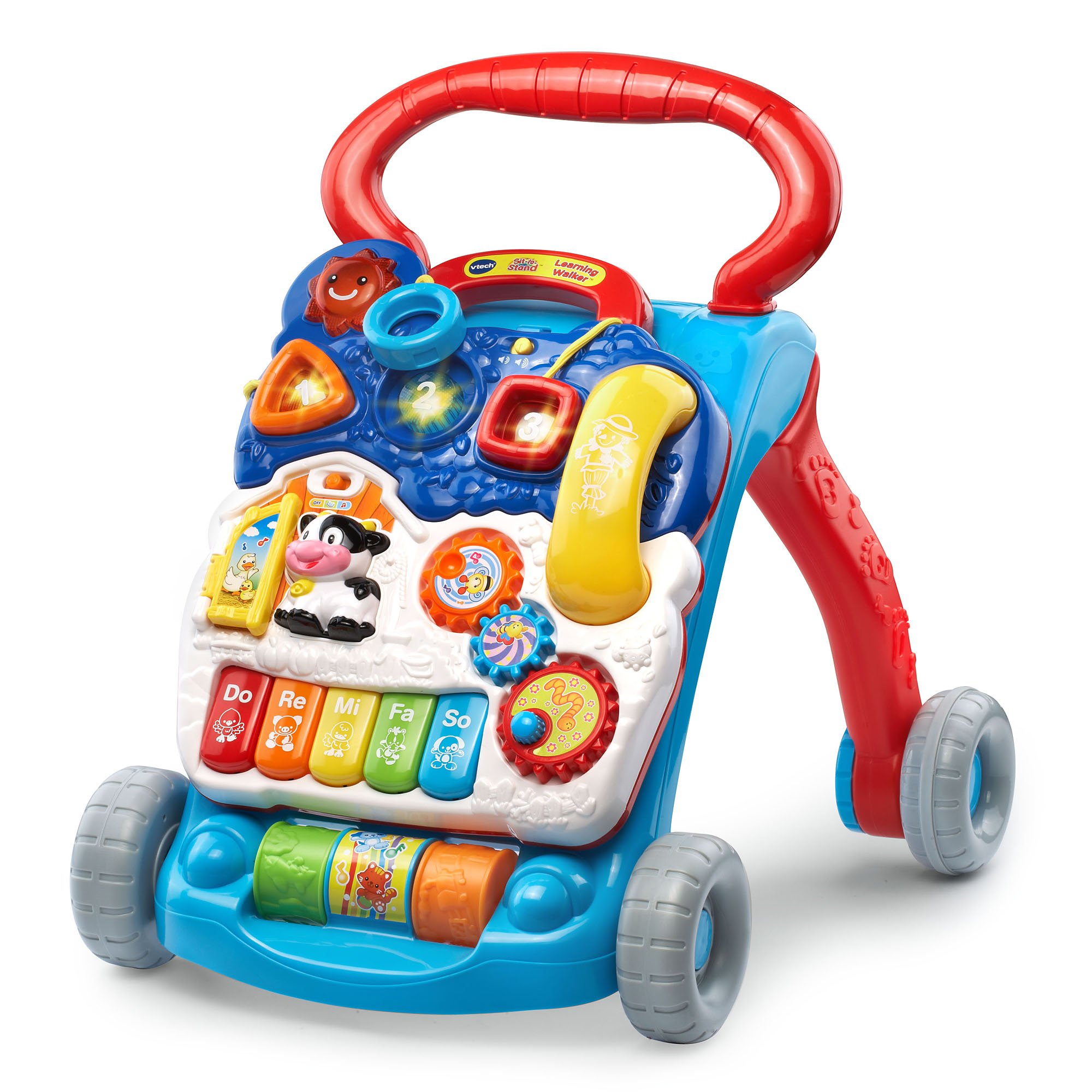
The VTech Sit-to-Stand Learning Walker exemplifies what parents should prioritize. Its removable activity tray works for floor play when your baby is still sitting, then reattaches when they're ready to cruise. Five piano keys introduce musical notes, while three shape sorters and light-up buttons keep little hands busy.
What sets this walker apart is its developmental progression. The phone handset encourages role-play, spinning gears build cause-and-effect understanding, and colorful rollers reward reaching and batting motions. It's designed to work on both carpet and bare floors, so you won't need to limit where your baby practices.
With a 4.8 out of 5 rating, parents consistently praise its sturdy construction and how long it holds their baby's attention across different developmental stages.
Common Mistake to Avoid
Many parents choose walkers based solely on entertainment value, overlooking stability features. A walker packed with toys but lacking a wide, stable base can increase tipping risk. Always prioritize balance support and controlled wheel design over flashy extras.
Who Should Choose This Walker
This walker suits parents who want one product that serves multiple stages—from sitting play to confident walking. It's ideal if you have mixed flooring types at home or want educational features beyond basic mobility support.
Skip it if you're looking for a minimalist design without electronic features, or if you prefer walkers without sound effects.
Related Buying Guides
- VTech vs Bautia vs Skip Hop Baby Walker: Which Is Best for Your Child?
- VTech Sit-to-Stand Learning Walker Guide: What New Parents Should Know
- Skip Hop Baby Walker Not Moving? How to Fix Speed Control and Wheel Issues
- How to Keep Your VTech Sit-to-Stand Walker Rolling Smoothly
- Skip Hop vs Bautia vs VTech Baby Walker: Which One to Buy in 2026?
- Best Baby Walkers for Learning to Walk: Skip Hop vs Bautia vs VTech Compared