How to Clear Your Baby's Stuffy Nose Safely at Home
Learn how to safely clear your baby's nasal congestion at home using a gentle nasal aspirator. Step-by-step guide for quick relief without discomfort.
How to Clear Your Baby's Stuffy Nose Safely
A congested baby can't sleep well, feed comfortably, or breathe easily. When mucus builds up, parents need a safe and effective way to provide relief. Here's how to clear your baby's stuffy nose at home without causing discomfort.
What You'll Need
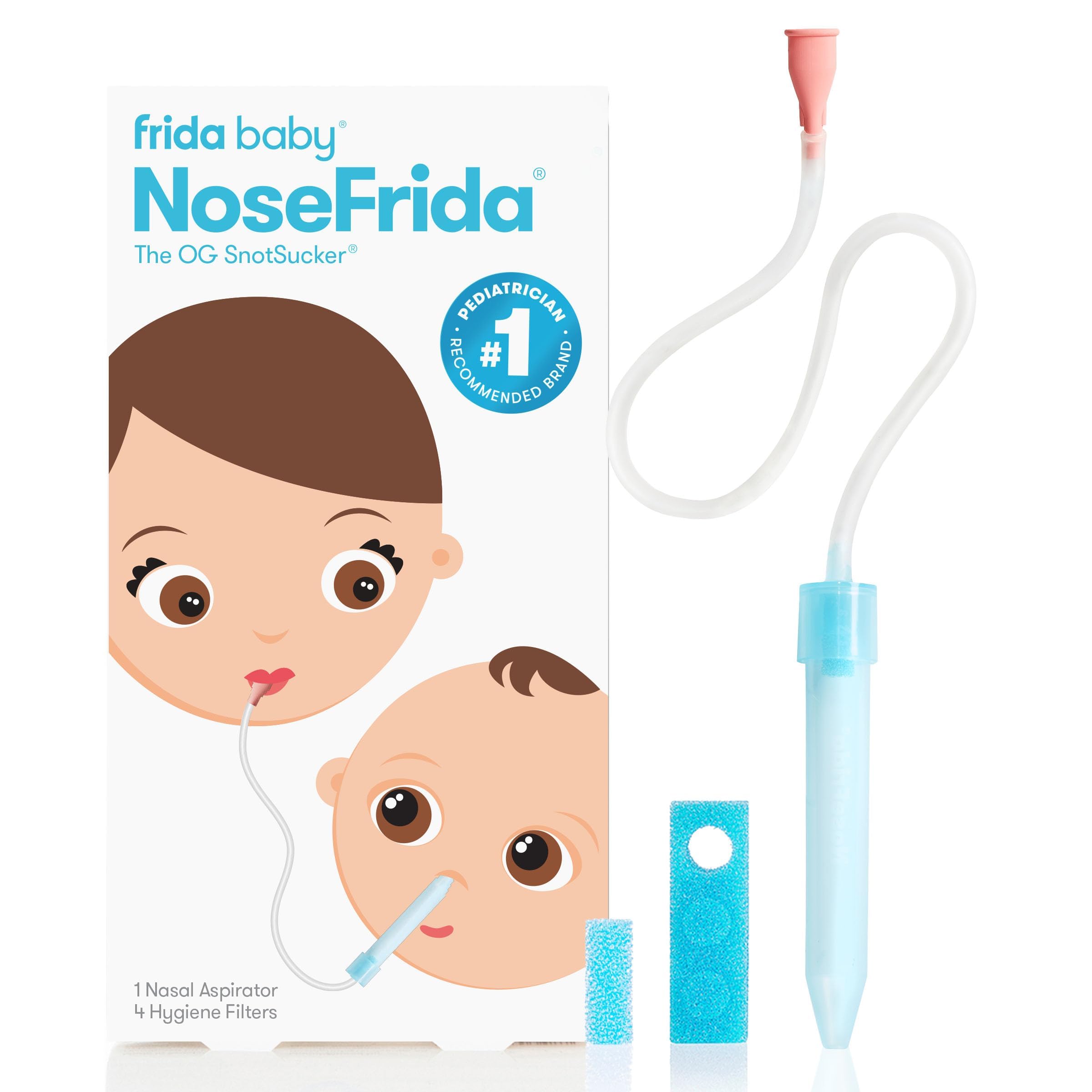
You'll need a nasal aspirator designed for babies and saline drops or spray. The Frida Baby NoseFrida SnotSucker is a parent-controlled aspirator that creates a seal on the outside of the nostril rather than inserting anything inside. It includes disposable hygiene filters that block mucus and bacteria transfer.
Step-by-Step Instructions
Step 1: Loosen the Mucus
Spray a saline solution into each nostril. This softens thick mucus and makes it easier to remove. Wait about 30 seconds before moving to the next step.
Step 2: Position the Aspirator
Place the wide tube against the outside of your baby's nostril to create a gentle seal. Do not insert the tube into the nose.
Step 3: Create Suction
Use the red mouthpiece to apply gentle suction. Move the tube in a slow circular motion against the nostril. You'll hear and see mucus being drawn out into the collection area.
Step 4: Replace the Filter
Change the disposable hygiene filter after each use to maintain suction and prevent germ transfer.
What to Check Before Buying a Nasal Aspirator
- Safety design: Choose one that stays outside the nostril rather than inserting into delicate nasal passages
- Hygiene features: Look for disposable filters that block bacteria and mucus transfer
- Ease of cleaning: Dishwasher-safe parts make maintenance simpler
- Parent control: Manual suction gives you better control than battery-powered options
Who This Method Works Best For
This approach is ideal for infants and toddlers who can't blow their own noses yet. It's especially helpful during cold season, allergy flare-ups, or anytime congestion interferes with feeding or sleep.
Parents who are nervous about bulb syringes or worried about inserting anything into their baby's nose will appreciate the external seal design.
When to Skip This Method
If your baby has a fever above 100.4°F, shows signs of respiratory distress, or has congestion lasting more than two weeks, consult your pediatrician instead of relying solely on home suction.
Related Buying Guides
- Hihened vs Frida Baby Nasal Aspirators: Which Is Right for Your Baby?
- Best Baby Nasal Aspirators Under $85: Budget-Friendly Options for Congestion Relief
- Best Baby Nasal Aspirators Under $20 for Quick Congestion Relief
- Best Baby Nasal Aspirators for Congestion Relief: 4 Top Options Compared
- Best Baby Nasal Aspirators: Electric vs Manual Models Compared
- Best Alternative to Manual Bulb Nasal Aspirators for Babies