How to Help Your Baby Transition from Crawling to Walking
Learn how to safely support your baby's first steps with the right walker. Tips on choosing a stable, engaging activity walker for balance and motor skill development.
Supporting Your Baby's First Steps
When your baby starts pulling up on furniture and cruising along walls, they're ready to practice walking. The key is giving them a stable support tool that builds confidence without rushing the process. A sit-to-stand walker with a removable activity panel lets you adapt to their pace—starting with floor play and gradually introducing supported walking.
Step 1: Start with Floor-Based Activity
Before your baby is ready to stand, remove the activity panel and let them explore while sitting. Look for walkers with shape sorters, spinning gears, and musical elements that encourage reaching and grasping. This builds the hand-eye coordination they'll need once they're upright.
Step 2: Introduce the Walker Frame
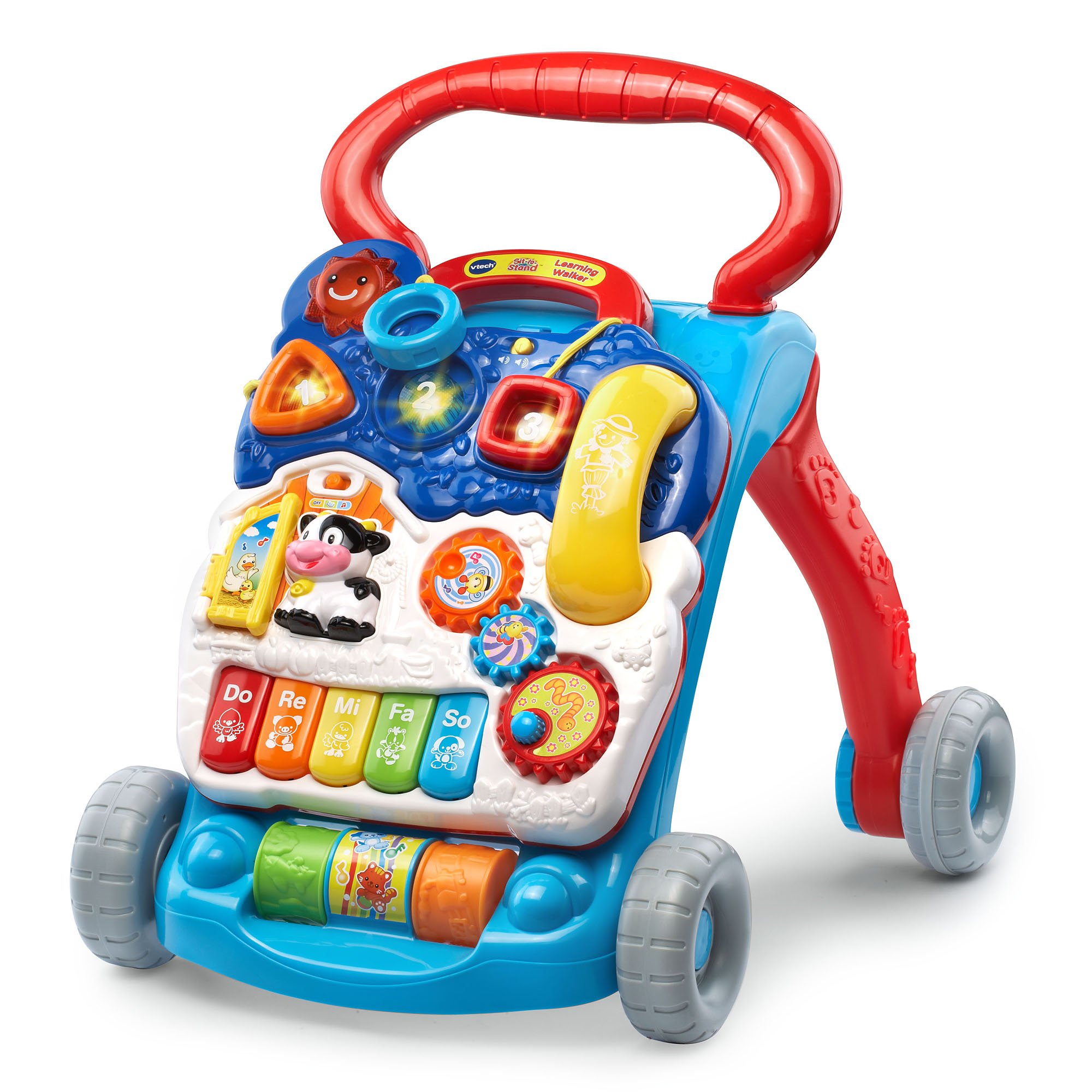
Once your baby can pull to stand, reattach the activity panel to the walker base. The VTech Sit-to-Stand Learning Walker offers a sturdy frame that works on both carpet and hard floors, with a wide base that prevents tipping. The five piano keys and light-up buttons keep babies engaged while they practice balance.
Step 3: Encourage Short Walking Sessions
Let your baby push the walker in short bursts, staying close to supervise. The built-in activity center keeps them motivated—colorful rollers, a toy telephone, and three shape sorters provide sensory feedback as they move. This combination of movement and play helps develop stability naturally.
What to Check Before Buying a Baby Walker
- Stability: A wide wheelbase prevents tipping and supports unsteady first steps
- Dual-use design: Removable panels let you start early and extend the product's lifespan
- Surface compatibility: Wheels should work on both carpet and hardwood without slipping
- Engagement features: Lights, sounds, and textures keep babies practicing longer
- Safety certifications: Look for frustration-free packaging and established brand safety standards
Who This Approach Works For
This method suits babies aged 9–18 months who are pulling up but not yet walking independently. Parents who want a tool that grows with their child will appreciate the removable activity panel. The walker supports motor skill development and balance training without forcing milestones.
If your baby isn't showing interest in standing or your home has stairs without gates, wait until they're ready and your space is secure.
Related Buying Guides
- VTech vs Bautia vs Skip Hop Baby Walker: Which Is Best for Your Child?
- VTech Sit-to-Stand Learning Walker Guide: What New Parents Should Know
- Skip Hop Baby Walker Not Moving? How to Fix Speed Control and Wheel Issues
- How to Keep Your VTech Sit-to-Stand Walker Rolling Smoothly
- Skip Hop vs Bautia vs VTech Baby Walker: Which One to Buy in 2026?
- Best Baby Walkers for Learning to Walk: Skip Hop vs Bautia vs VTech Compared