How to Introduce Your Baby's First Toothbrush: A Step-by-Step Guide for New Parents
Starting oral hygiene early sets the foundation for lifelong dental health. This guide walks you through introducing your baby's first toothbrush, from choosing the right time to making brushing a positive daily routine.
Introducing oral care to your baby might feel daunting, but starting early creates healthy habits that last a lifetime. Most parents wonder when to begin, how to make it comfortable, and what tools work best for tiny mouths. The good news is that with the right approach, your baby can adapt quickly to this new routine.
When to Start Baby's First Toothbrush
You can begin cleaning your baby's gums even before teeth appear, but the ideal time to introduce a finger toothbrush is around 3 months. At this stage, babies are exploring textures and learning to accept new sensations in their mouths. Early introduction also helps soothe teething discomfort that starts around 4-6 months.
Choosing the Right First Toothbrush
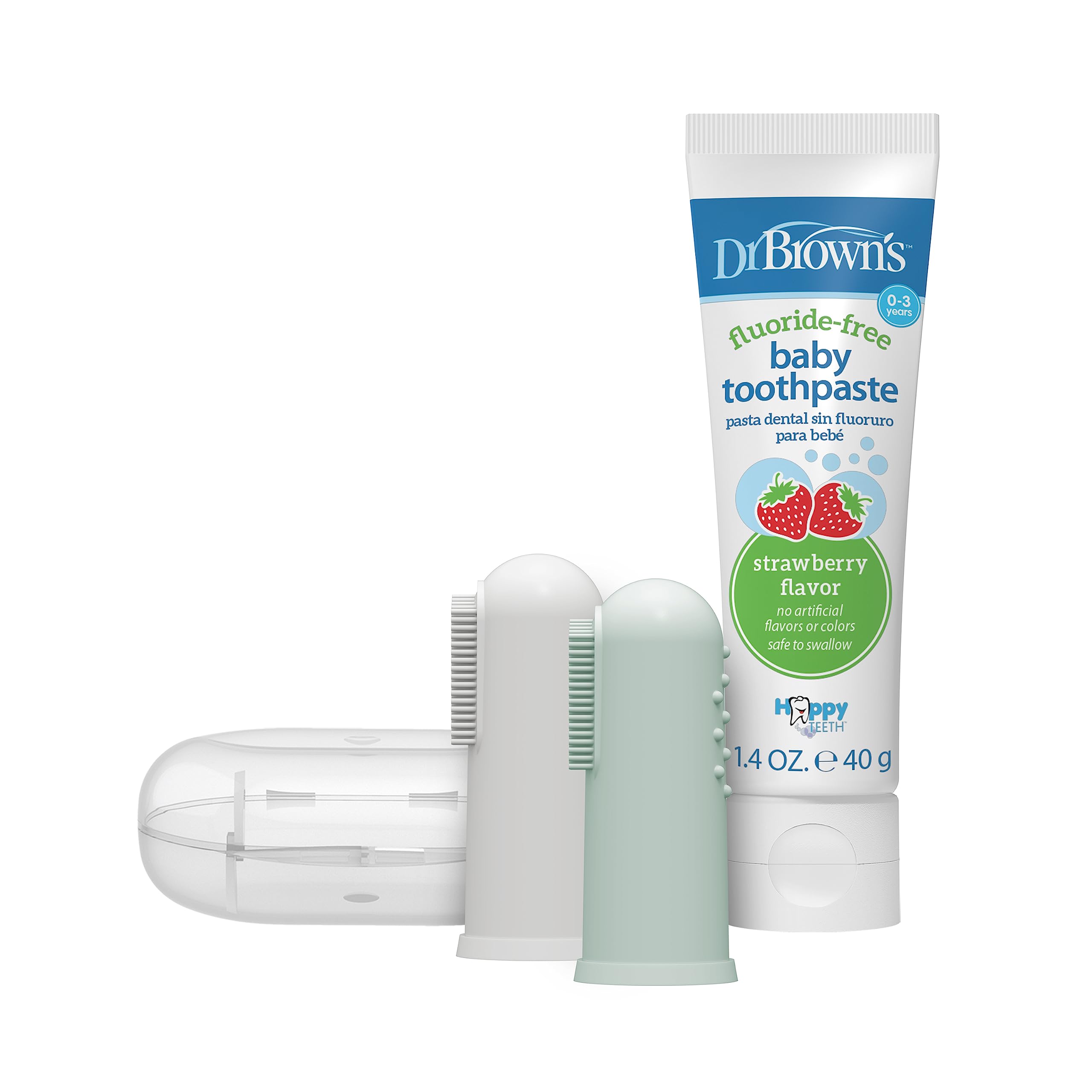
A silicone finger toothbrush works perfectly for infants because it fits over your finger, giving you complete control while staying gentle on sensitive gums. The Dr. Brown's 100% Silicone Baby Finger Toothbrush and Toothpaste Set includes two soft-bristled brushes, a protective storage case, and fluoride-free strawberry toothpaste safe for swallowing. The dual-sided design features soft bristles on one side and a textured surface on the other for gum massage during teething.
Step-by-Step Introduction Process
Week 1: Familiarization
Let your baby see and touch the finger toothbrush during non-feeding times. Place it near their mouth without pressure. This builds curiosity rather than resistance.
Week 2: Gentle Contact
After bath time when your baby is relaxed, slip the brush onto your finger and gently rub their gums for 10-15 seconds. Use the textured side first since it mimics the sensation of teething toys they already know.
Week 3: Establish Routine
Brush twice daily after morning and evening feedings. Start with just water, then introduce a rice-grain amount of safe-to-swallow toothpaste. The strawberry flavor in this set makes the experience more pleasant without artificial ingredients.
Week 4: Build Duration
Gradually increase brushing time to 30-45 seconds per session. Use circular motions on gums and gentle back-and-forth strokes on any emerging teeth.
Making Brushing Enjoyable
- Sing a short song to create positive associations
- Let your baby hold a second brush to feel involved
- Brush after their happiest time of day
- Keep sessions short and consistent rather than long and irregular
- Store the brush in its case to maintain cleanliness between uses
Cleaning and Maintenance
Since the brush is 100% silicone and BPA-free, it tolerates multiple cleaning methods. You can place it on the top rack of your dishwasher, use electric or microwave sterilizers, or boil it in water. The included storage case keeps it protected when traveling or between uses.
Who This Approach Suits
This method works well for parents starting oral care between 3-12 months, families who want a complete starter kit, and caregivers looking for a budget-friendly solution that includes both brushes and safe toothpaste. The two-brush pack means you always have a backup while one is being cleaned.
Who Should Consider Alternatives
If your baby is older than 18 months and already has several teeth, a handled toothbrush designed for toddler independence might be more appropriate. Babies with strong bite reflexes may need extra supervision initially.
Final Verdict
Introducing a finger toothbrush early makes oral care feel natural rather than forced. The combination of soft silicone bristles, a textured massage surface, and swallow-safe toothpaste creates a gentle yet effective routine. Consistency matters more than perfection in those early months.
Related Buying Guides
- Thick vs Thin Playpen Mats: Which Cushion Level Does Your Baby Actually Need?
- Car Seat Protector Features That Actually Matter for Everyday Parenting
- Best Baby Carrier with Hip Seat for Baby Shower Gifts 2026
- SafeRest vs Shunjie.Home Crib Mattress Protector: Which One Should You Buy?
- Winter Dry Skin Season: Cotton vs Muslin No-Scratch Mittens for Newborns Under $15
- Summer Road Trip Cup Holder Fixes Every Family Car Needs