How to Keep Baby Socks On: The Gripper Solution Every Parent Needs
If you've spent half your day hunting for missing baby socks, you're not alone. Learn how gripper socks provide a practical solution that actually stays put while supporting your child's development.
Every parent knows the frustration: you put socks on your baby in the morning, and by naptime they've mysteriously vanished. Traditional baby socks slip off easily because infant feet are small, chubby, and constantly moving. This creates a cycle of lost socks, cold feet, and wasted money replacing pairs that never seem to stay together.
The solution isn't buying tighter socks or giving up entirely. Non-slip gripper socks address both the slipping-off problem and the safety concerns that come with babies learning to move and walk.
Why Regular Baby Socks Won't Stay On
Baby feet lack the defined ankle shape that holds up adult socks. Their legs are proportionally thicker, and their constant kicking and crawling work against any sock's grip. Elastic bands can help but often leave marks or feel uncomfortable, leading babies to pull them off themselves.
As babies transition from crawling to walking, slippery socks on hard floors become a safety issue. Standard socks offer no traction, turning every step into a potential tumble.
The Gripper Sock Advantage
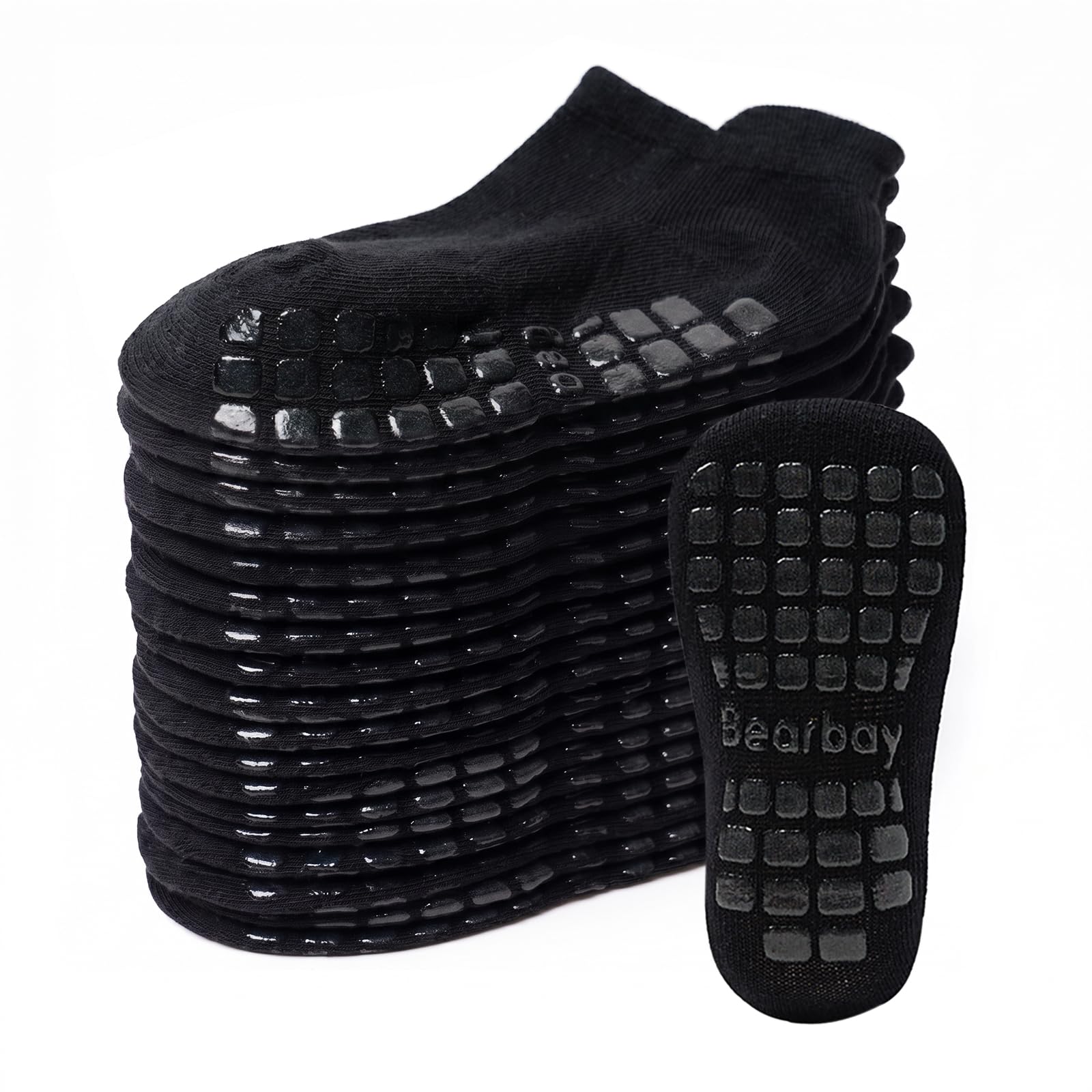
The Baby Non Slip Ankle Socks with Grippers for 0 Months-7 Years Old Walking Socks from Bearbay tackle both problems with a simple design change. Textured grippers on the sole provide traction on smooth surfaces, while the ankle construction helps them stay in place throughout active play.
These socks work for the entire early childhood span, from newborns who need warm feet to toddlers mastering stairs. The 4.8 out of 5 rating from nearly 2,000 parents reflects their practical effectiveness in real daily use.
What Makes These Socks Actually Stay Put
- Snug ankle fit: Designed to grip without constricting circulation or leaving deep marks
- Gripper dots: Provide floor traction while also creating friction that resists sliding off the foot
- Appropriate stretch: Accommodates growing feet without becoming loose
- Low-profile design: Fits inside shoes without bunching, unlike crew-length socks
Practical Use Across Ages
For infants not yet mobile, these socks simply stay on better during diaper changes and car seat transfers. Once babies start scooting and crawling, the grippers protect knees and toes on hard floors. During the crucial walking phase, they provide confidence-building stability that helps kids focus on balance rather than slipping.
At the latest price, you're investing in socks that won't disappear after one wear and genuinely serve a developmental purpose beyond just covering feet.
Who Should Choose These Socks
Parents tired of the sock struggle will appreciate how these Baby Non Slip Ankle Socks with Grippers for 0 Months-7 Years Old Walking Socks actually remain on feet during normal activity. They're particularly valuable for families with hard flooring, active babies who move constantly, or anyone preparing for the walking stage.
If you have primarily carpeted floors and a less active baby, or if your child has unusually sensitive skin that reacts to textured materials, standard soft socks might suffice for now.
The Bottom Line
Keeping baby socks on doesn't require constant vigilance or elaborate tricks. Gripper socks solve the practical problem while adding a safety feature that supports your child's physical development. For parents who've experienced the daily annoyance of vanishing socks, this small change makes a noticeable difference in both convenience and peace of mind.
Related Buying Guides
- Best Baby Feeder for Mess-Free Self-Feeding Practice
- Baby Silicone Placemat Not Staying Put? How to Fix the 5 Most Common Mealtime Mat Problems
- How to Pick a Nursing Cover That Keeps Eye Contact With Your Baby
- Giraffe Baby Laundry Basket Review: Cute Meets Functional in the Nursery
- Need a Replacement Swaddle? Why the Love to Dream Swaddle UP Is the One to Reorder
- Baby Brezza Universal Detergent Soap Tablets Features Explained: What Makes Them the Best Baby Detergent for Bottle Washers