How to Support Your Baby's First Steps with a Montessori Walker
Learn how to safely introduce a Montessori-style wooden walker to help babies 6-12 months develop walking skills with proper support and engaging activities.
Supporting Your Baby's Walking Journey
When your baby shows signs of readiness to walk—pulling up on furniture, cruising along walls, or standing independently—a well-designed walker can provide the right support during this exciting milestone. The key is choosing a tool that encourages natural movement without rushing development.
Choosing the Right Walker Design
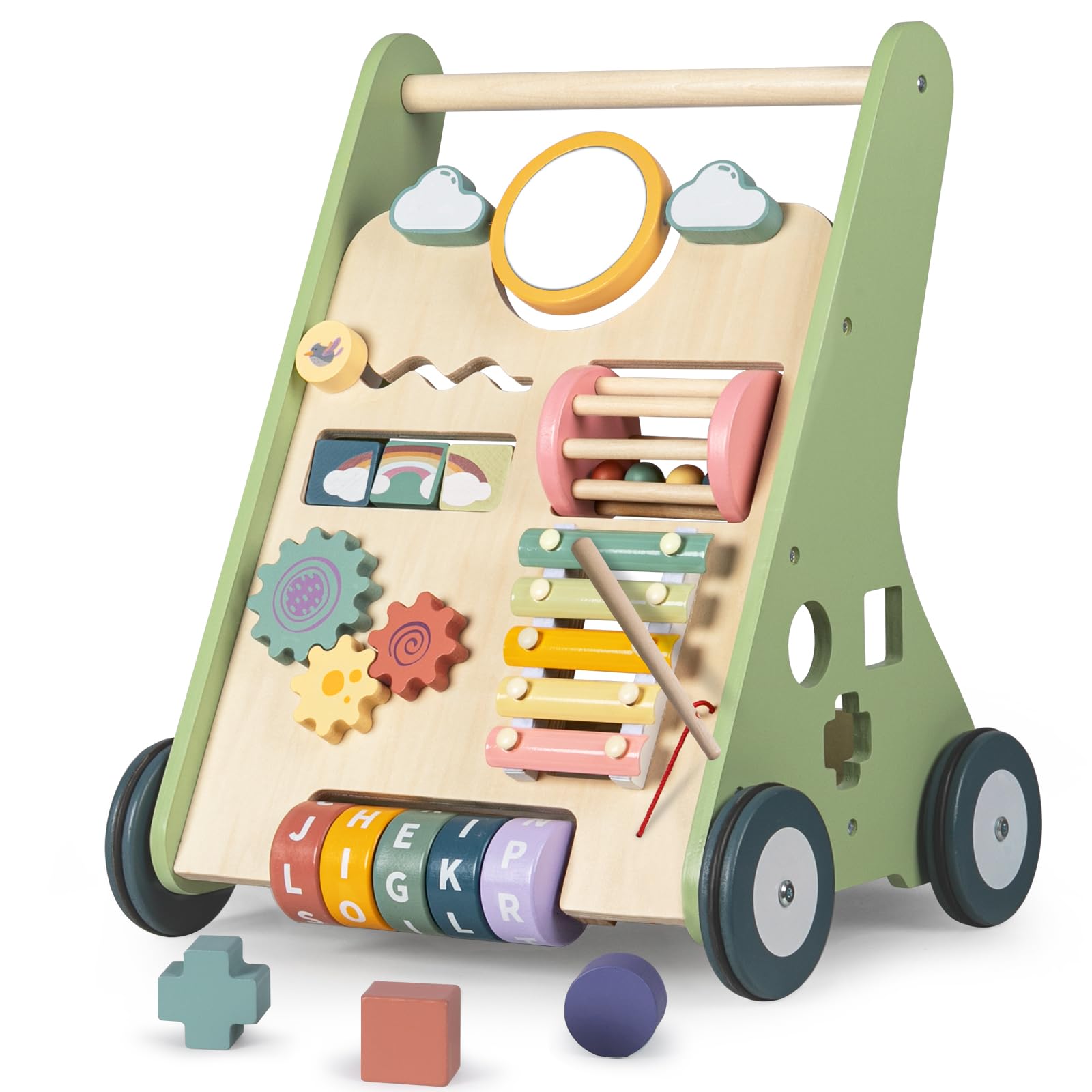
Look for a walker with a sturdy wooden frame and a weighted base that prevents tipping. The Bautia Wooden Baby Walker features natural wood construction with smooth edges and a stable design that supports babies from 6 to 12 months as they learn to walk.
Unlike seat-style walkers that can delay development, push walkers allow babies to practice weight-bearing and balance while moving forward. This mirrors natural walking patterns and builds leg strength safely.
Setting Up for Safe Practice
Before introducing the walker, create a safe practice area:
- Clear a flat, carpeted space free of stairs and obstacles
- Remove rugs that might slide or create tripping hazards
- Ensure the walker's wheels move smoothly but not too fast
- Always supervise walking practice sessions
Adding Developmental Value
The best walkers do double duty as activity centers. The Bautia walker includes an interactive panel with a rolling letter wheel, xylophone, flip board, and tracking games that work on hand-eye coordination and cognitive skills when your baby needs a sitting break.
This dual function means the walker remains useful before and after the walking phase, making it a worthwhile investment for the 6-18 month developmental window.
Daily Walking Routine
Start with short 5-10 minute sessions twice daily. Let your baby set the pace—some days they'll want to push actively, other days they'll prefer sitting and playing with the activity panel. Both modes support development.
Watch for signs of fatigue like wobbly legs or fussiness, and end sessions before your baby gets overtired. Consistent, positive practice builds confidence faster than long, exhausting sessions.
Who This Approach Works For
This method suits babies who can pull to standing independently and show interest in moving around. If your baby isn't pulling up yet, focus on floor play and crawling first. Walking will follow naturally when their muscles are ready.
Related Buying Guides
- Is the Bautia Wooden Baby Walker Worth It? Common Questions Answered
- Best Wooden Baby Walker for Learning to Walk: Bautia Montessori Activity Walker Guide
- How to Choose a Safe Montessori Baby Walker for Early Walkers
- Best Baby Walkers Under $70: Top 3 Picks for Learning to Walk in 2026
- How to Help Your Baby Learn to Walk with a Montessori Push Walker
- 3 Best Baby Walkers for Early Development: Wooden, Electronic & Convertible Options Compared