Magnetic vs Latch Cabinet Locks: Which System Works for Your Kitchen?
Choosing between magnetic and latch cabinet locks depends on your kitchen layout, aesthetic preferences, and how often you access secured cabinets. This comparison breaks down two popular systems to help you find the right fit.
Two Approaches to Cabinet Safety
When babyproofing your kitchen, you'll encounter two main lock designs: magnetic systems that use a key to unlock from outside, and spring-loaded latches that open with internal pressure. Both keep curious toddlers out, but they work differently and suit different households.
The choice comes down to how your cabinets are built, whether you have countertop overhangs, and how much you value invisible hardware versus quick adult access.
Magnetic Locks: Hidden Security with Key Access
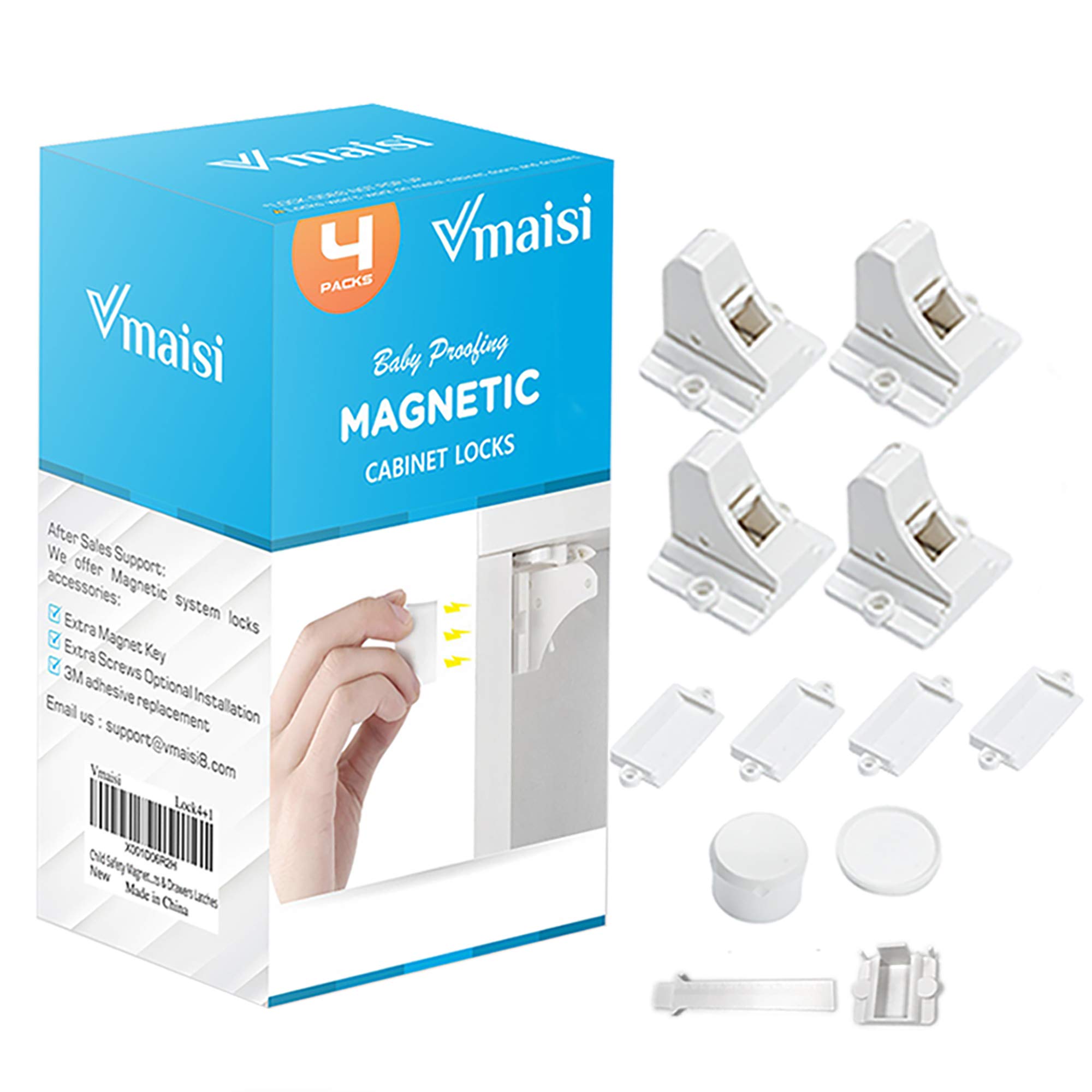
The Vmaisi Magnetic Cabinet Locks for Babies install inside cabinet doors using adhesive strips, keeping them completely hidden from view. The 4-lock set includes one magnetic key that releases the internal latch when held against the cabinet exterior.
How Magnetic Systems Work
Each lock attaches to the inside of a cabinet door with strong adhesive backing. When you close the door, a catch engages automatically. To open, place the magnetic key on the door's outer surface near the lock location—the magnet pulls the internal mechanism and releases the catch.
This system works on cabinet doors up to 2 inches thick and fits most standard kitchen, bathroom, and storage cabinets. The locks stay invisible to children and guests while maintaining your kitchen's appearance.
Best For
- Parents who want completely hidden childproofing
- Cabinets storing truly dangerous items accessed infrequently
- Households with pets that open cabinets
- Renters who cannot drill holes
Spring-Loaded Latches: One-Hand Adult Access
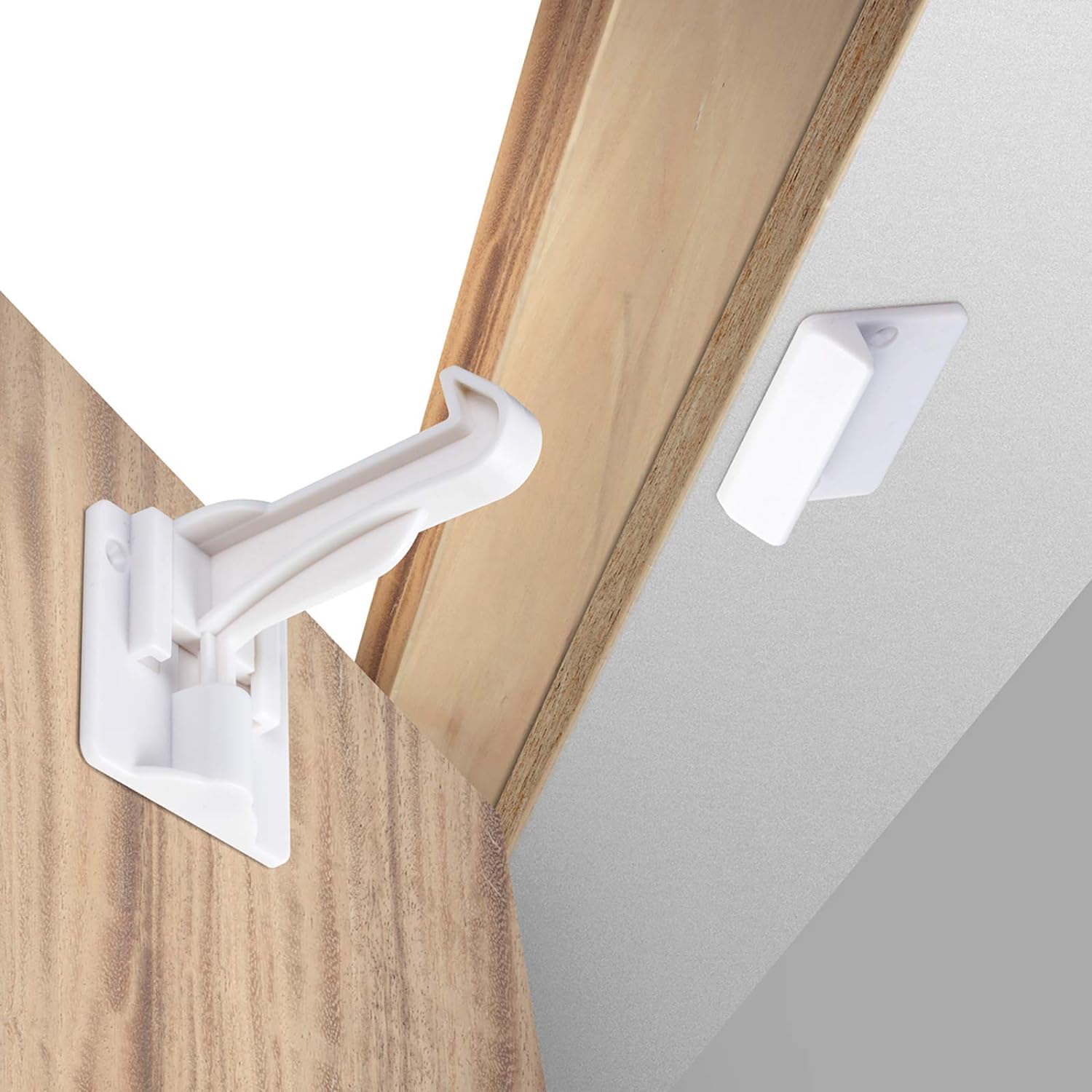
The Upgraded Invisible Baby Proofing Cabinet Latch Locks take a different approach. The 10-pack uses a hook-and-release mechanism that adults can disengage with finger pressure from inside the cabinet, but toddlers cannot figure out.
How Latch Mechanisms Work
Each latch mounts inside the cabinet with 3M adhesive. A flexible arm hooks onto a catch when the door closes. To open, you pull the door slightly, reach inside the gap, and press the spring-loaded release. The motion feels natural after a few tries.
The upgraded version features a longer hook arm designed to work even when countertops overhang cabinet doors—a common issue in modern kitchens. The latches handle at least 20 pounds of pull tension and work on cabinets with or without internal crossbars.
Best For
- Frequently accessed cabinets where fumbling with a key gets tiresome
- Kitchens with countertop overhangs that block magnetic key placement
- Parents who prefer not tracking a small magnetic key
- Households wanting budget-friendly coverage of many cabinets
Installation and Daily Use
Both systems use adhesive installation—no drilling required. Magnetic locks need precise placement so the key aligns with the internal mechanism. Latch systems offer more flexibility since you're just pressing the release rather than targeting a specific spot.
Daily convenience favors latches for high-traffic cabinets. Reaching inside takes a second once you develop the habit. Magnetic locks require keeping the key accessible but away from children, which some parents find annoying when cooking.
For rarely opened cabinets storing truly hazardous materials, magnetic locks provide stronger psychological security since there's no way for a determined child to accidentally discover the release method.
Making Your Decision
Choose magnetic locks if you want invisible hardware, don't mind using a key, and need maximum security for cabinets storing medications or cleaning chemicals. The Vmaisi Magnetic Cabinet Locks for Babies work well for focused protection of high-risk areas.
Choose latch systems if you access secured cabinets frequently, have countertop overhangs, or want to childproof many cabinets without buying multiple magnetic keys. The Upgraded Invisible Baby Proofing Cabinet Latch Locks offer practical coverage for everyday kitchen safety.
Many households use both: magnetic locks for under-sink chemicals and medicine cabinets, latch locks for food storage and cooking supplies. Match the system to how each cabinet gets used.
Related Buying Guides
- Thick vs Thin Playpen Mats: Which Cushion Level Does Your Baby Actually Need?
- Car Seat Protector Features That Actually Matter for Everyday Parenting
- Best Baby Carrier with Hip Seat for Baby Shower Gifts 2026
- SafeRest vs Shunjie.Home Crib Mattress Protector: Which One Should You Buy?
- Winter Dry Skin Season: Cotton vs Muslin No-Scratch Mittens for Newborns Under $15
- Summer Road Trip Cup Holder Fixes Every Family Car Needs