What Are Silicone Baby Fruit Feeders and Why Parents Use Them for Teething
Silicone baby fruit feeders let infants safely self-feed fresh food and frozen treats while soothing teething pain. Learn how they work and what to look for.
What Is a Silicone Baby Fruit Feeder?
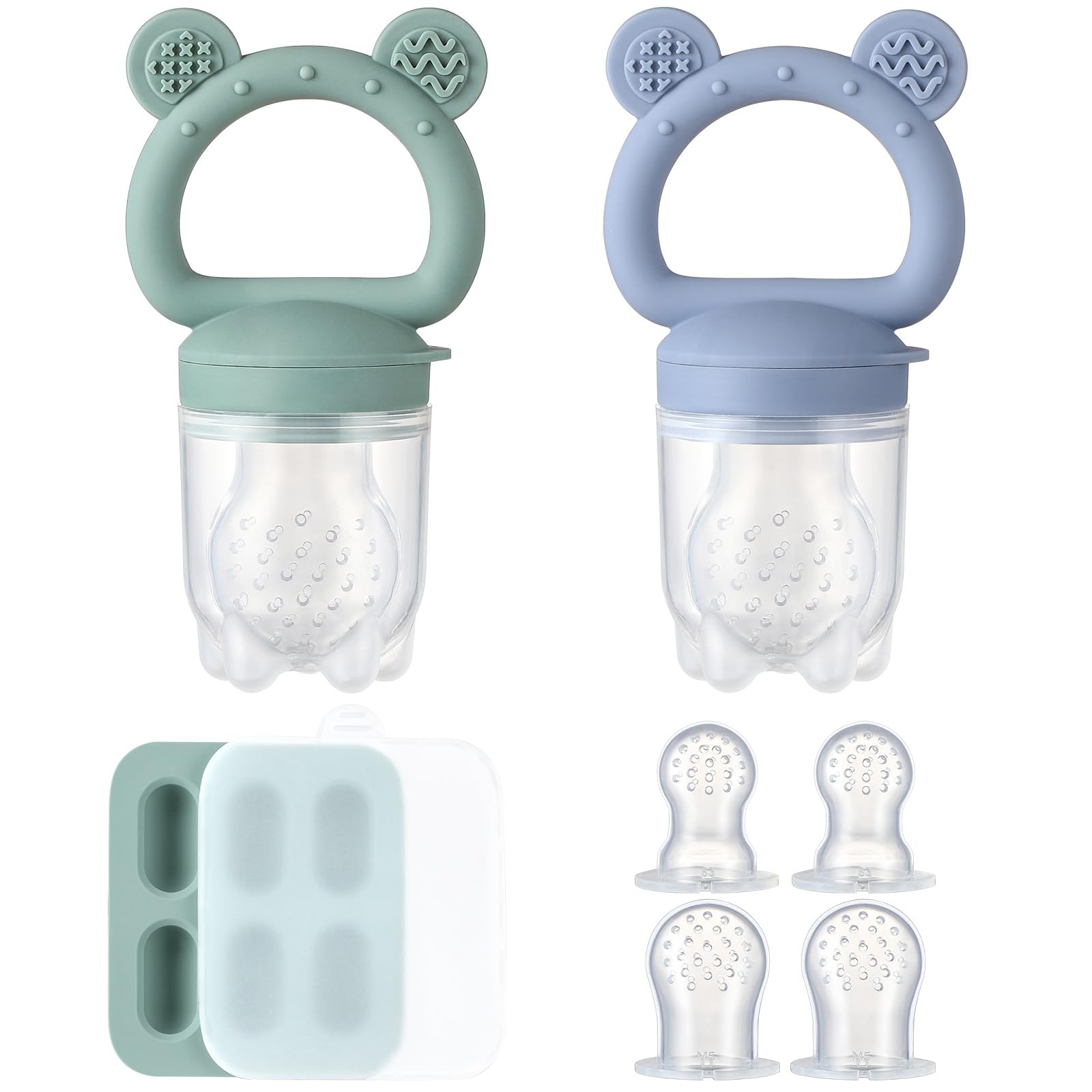
A silicone baby fruit feeder is a handheld tool that allows infants to safely explore solid foods without choking risk. The device features a soft silicone pouch with tiny perforations that let small, digestible pieces pass through while keeping larger chunks contained. Babies hold the handle and chew or suck on the pouch, making it ideal for introducing fresh fruit, frozen breastmilk, or vegetables during the teething stage.
Why Parents Choose Fruit Feeders for Teething Relief
Teething babies need soothing pressure on their gums, and cold textures provide natural relief. Silicone feeders double as teethers when filled with frozen fruit or breastmilk popsicles. The POIKSHARK 2-pack feeder set includes mini freezer trays designed specifically for making small frozen treats that fit the pouches perfectly.
Beyond comfort, these feeders encourage self-feeding skills and sensory exploration. Babies learn to grip, chew, and taste new foods independently while parents avoid the anxiety of choking hazards. The one-piece silicone handle design eliminates small detachable parts that could pose risks.
How to Evaluate a Baby Fruit Feeder
When shopping for a fruit feeder, prioritize these features:
- Material safety: Look for BPA-free, PVC-free, and phthalate-free silicone that is dishwasher-safe and heat-resistant.
- Hole size: Tiny perforations prevent large chunks from passing through while allowing juice and soft pulp to reach baby's mouth.
- Handle design: A one-piece construction with no removable parts reduces choking risk and makes cleaning simpler.
- Freezer compatibility: Some sets include molds or trays for making frozen breastmilk or puree popsicles that fit directly into the feeder pouch.
- Portability: Extra pouches or travel-friendly designs let you prep multiple feeders in advance.
Who Should Use This Product
Silicone fruit feeders work best for infants aged 4–12 months who are beginning solid foods or actively teething. Parents who want to offer fresh fruit, frozen breastmilk, or vegetable purees in a mess-contained, safe format will find these feeders practical for daily use and on-the-go feeding.
Who Should Skip This Product
If your baby has already mastered chewing and swallowing solid pieces, a traditional mesh feeder or open feeding may be more appropriate. Babies with severe texture sensitivities may reject the silicone pouch, and families who prefer baby-led weaning without tools might not need a feeder at all.
Related Buying Guides
- Best Teether for Applying Teething Gel to Babies 3 Months and Up
- How to Soothe a Teething Baby Who Can't Hold a Teether Yet
- How to Soothe Teething Pain While Introducing Solids Safely
- Best Alternative to Traditional Baby Teethers: Silicone Fruit Feeder with Freezer Tray
- ChooKaChoo Silicone Teething Mittens for Babies 3+ Months – 2 Pack Review
- Best Alternative to Traditional Teething Gels: Matchstick Monkey Applicator Teether