Silicone vs Nylon Bristles: Which Baby Bottle Brush Material Is Actually Safer?
Not all bottle brushes are created equal when it comes to material safety and cleaning effectiveness. Understanding the difference between silicone and nylon bristles can help you make a more informed choice for your baby's feeding routine.
The debate between silicone and nylon bristles in baby bottle brushes goes beyond personal preference. Parents rightly worry about what materials come into contact with their baby's bottles, and the bristle type plays a surprisingly important role in both hygiene and longevity.
Why Bristle Material Matters More Than You Think
Traditional nylon bristles have dominated the bottle brush market for decades, but silicone has emerged as a compelling alternative. The key difference lies in how each material interacts with bacteria and residue.
Silicone bristles resist harboring bacteria between cleanings because they dry faster and have a non-porous surface. Nylon, while effective at scrubbing, can retain moisture in its fibers and may develop odors over time. For parents dealing with formula residue or breast milk fat, this distinction becomes significant.
The All-Silicone Approach
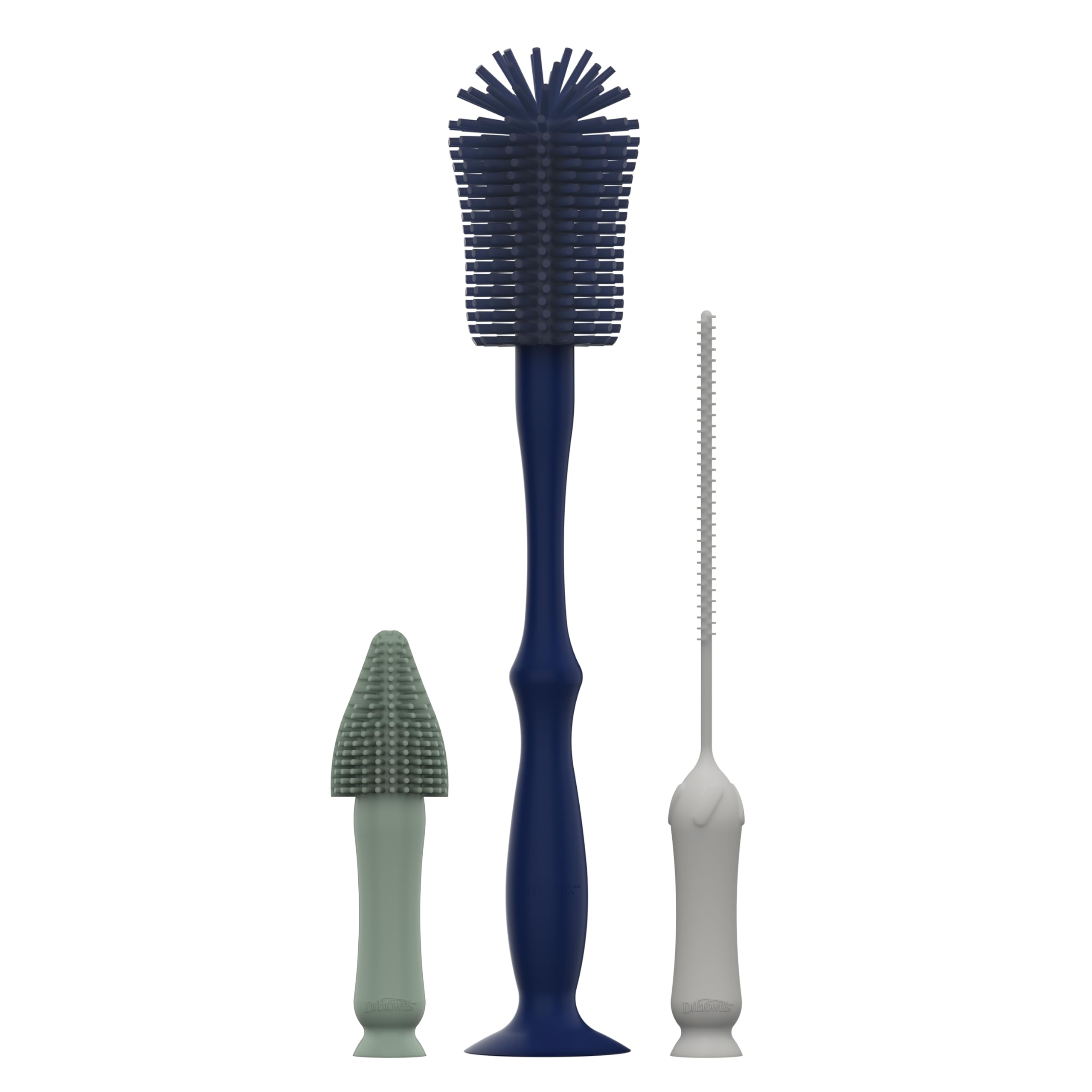
The Dr. Brown's Silicone Cleaning Brush Set commits fully to silicone construction across all three included brushes. The set provides a long-handled bottle brush, a spout brush shaped for nipples and sippy cup valves, and a thin straw brush.
What sets this approach apart is consistency. Every brush features soft silicone bristles that won't scratch bottles or pump parts. The BPA-free construction extends beyond the bristles to the entire brush body. Parents who prioritize uniformity in their cleaning tools appreciate having one material standard across all feeding accessories.
The bottle brush reaches deep into standard and wide-neck bottles, while the specialized shapes handle the detail work that often gets neglected. Breast pump users particularly value having brushes that can clean valves and membranes without leaving scratches.
The Hybrid Strategy
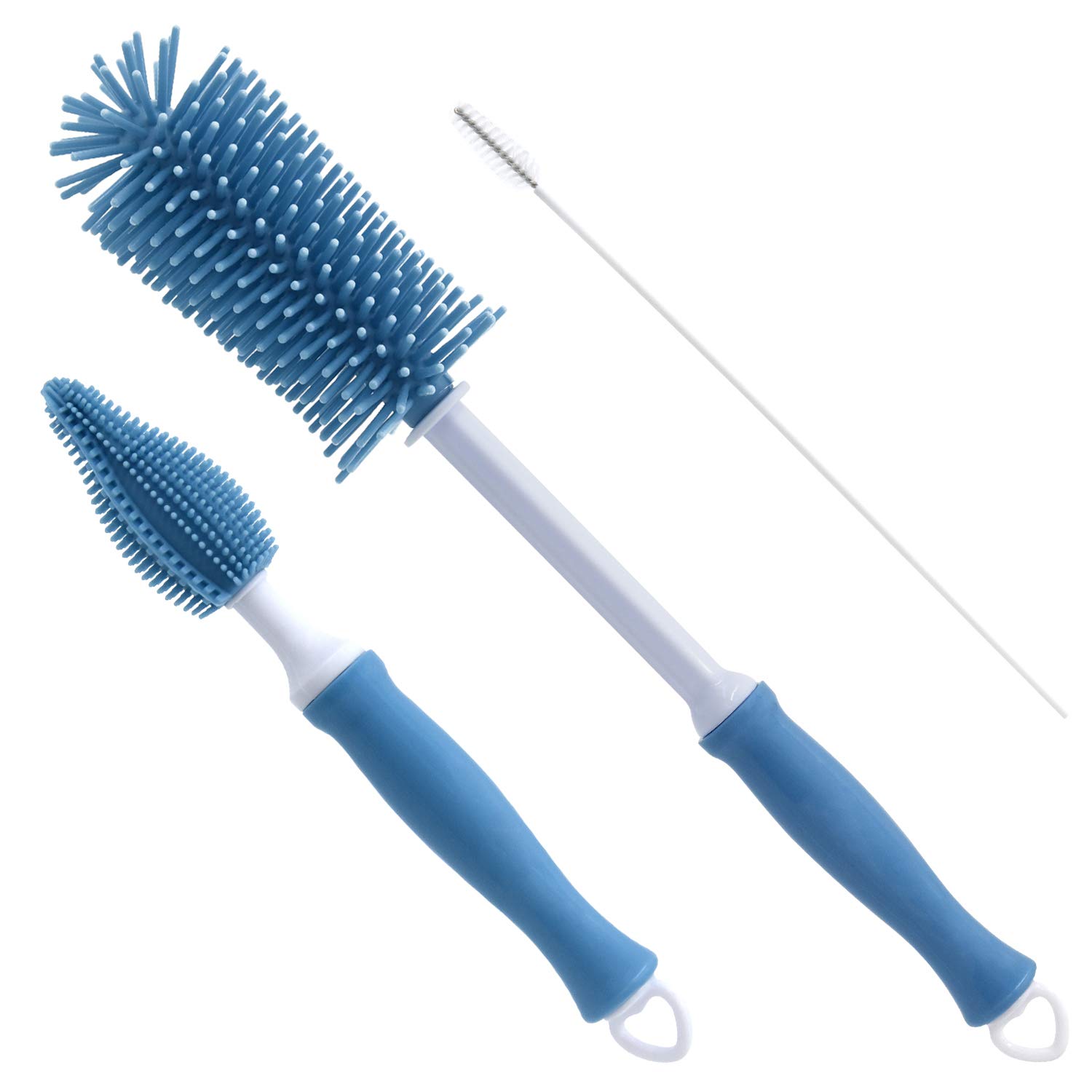
The Silicone Cleaning Brush by Auerllcy takes a different path by combining two silicone brushes with one nylon brush in its three-piece configuration. This mixed-material approach acknowledges that different cleaning scenarios may benefit from different bristle types.
The main bottle brush features a 12-inch handle with silicone bristles and an ergonomic non-slip grip. The food-grade silicone construction focuses on the primary cleaning tool, where bacterial resistance matters most. The inclusion of a nylon brush provides an option for situations where more aggressive scrubbing might be needed.
This budget-friendly set extends its utility beyond baby bottles to water bottles, sports bottles, vases, and glassware. Parents who want one set to handle multiple household cleaning tasks find value in this versatility.
Material Comparison at a Glance
| Factor | Silicone Bristles | Nylon Bristles |
|---|---|---|
| Bacterial Resistance | High - non-porous surface | Moderate - can trap moisture |
| Scratching Risk | Very low - soft and flexible | Low to moderate |
| Durability | Long-lasting, resists fraying | May fray over time |
| Dishwasher Safe | Yes - heat resistant | Varies by product |
Making the Right Material Choice
Neither material is universally superior. Silicone excels in hygiene, longevity, and gentle cleaning. It handles high heat without degrading, making dishwasher sanitation straightforward. Parents dealing with thrush concerns or those wanting minimal bacterial risk lean toward all-silicone options.
Nylon brings aggressive scrubbing power for stubborn dried-on formula. Some parents keep both materials on hand, using silicone for daily maintenance and nylon for deep cleaning sessions.
Who Should Choose All-Silicone Sets
- Parents prioritizing bacterial resistance and hygiene above all else
- Those cleaning delicate breast pump parts or expensive bottles
- Families wanting dishwasher-safe cleaning tools throughout
- Parents with premature infants or babies with compromised immune systems
Who Might Prefer Hybrid Sets
- Budget-conscious families wanting multi-purpose cleaning tools
- Parents who occasionally need more aggressive scrubbing power
- Those cleaning both baby bottles and regular household drinkware
- Families comfortable managing different brush materials
The Verdict on Bristle Materials
Silicone bristles represent the safer choice from a pure hygiene standpoint. Their resistance to bacterial growth, inability to scratch surfaces, and heat tolerance make them ideal for baby bottle care. The material science supports silicone's advantages in sanitation.
That said, hybrid sets with one nylon brush offer flexibility without significantly compromising safety, especially when the silicone brushes handle the majority of cleaning duties. The choice ultimately depends on whether you value specialized baby hygiene or versatile household utility.
For parents focused exclusively on infant feeding safety, investing in an all-silicone set provides peace of mind. For those managing broader cleaning needs on a budget, a hybrid approach delivers practical value.
Related Buying Guides
- Car Seat Protector Features That Actually Matter for Everyday Parenting
- Best Baby Carrier with Hip Seat for Baby Shower Gifts 2026
- SafeRest vs Shunjie.Home Crib Mattress Protector: Which One Should You Buy?
- Winter Dry Skin Season: Cotton vs Muslin No-Scratch Mittens for Newborns Under $15
- Summer Road Trip Cup Holder Fixes Every Family Car Needs
- Newborn No-Scratch Mittens Under $15: Cotton vs Muslin for Daily Rotation