What Is No-WiFi Baby Monitor Technology and Why Parents Choose It
Discover how no-WiFi baby monitors work, why they're more secure than WiFi models, and what features to look for when choosing a closed-circuit monitor for your nursery.
What Is a No-WiFi Baby Monitor?
A no-WiFi baby monitor uses a dedicated, closed-circuit wireless connection—typically 2.4GHz FHSS (Frequency Hopping Spread Spectrum)—to transmit video and audio directly from camera to parent unit. Unlike WiFi monitors that connect through your home network and internet, these devices create a private, point-to-point link that doesn't rely on routers, apps, or cloud servers.
Why Parents Care About No-WiFi Monitors
Security is the primary driver. WiFi baby monitors can be vulnerable to hacking, unauthorized access, and internet outages. A closed-circuit monitor eliminates these risks entirely—no one outside your home can intercept the signal, and the system keeps working even when your internet goes down.
Setup is another advantage. No-WiFi monitors are plug-and-play. You don't need to configure network settings, download apps, create accounts, or troubleshoot connectivity issues. For sleep-deprived parents, this simplicity is invaluable.
How to Evaluate a No-WiFi Baby Monitor
When shopping for a closed-circuit monitor, prioritize these features:
- Range: Look for 900–1000ft outdoor range to cover larger homes and yards. Indoor range will be less due to walls.
- Battery life: Parent units with 20–30 hours of standby ensure you won't lose coverage overnight.
- Camera capabilities: Remote pan, tilt, and zoom let you follow movement without entering the room. Support for multiple cameras is useful for multi-child households.
- Screen size and quality: A 5-inch IPS display provides clear visibility without squinting. Single-view switching is easier to monitor than split-screen layouts.
- Two-way talk and sound activation (VOX): VOX mode conserves battery by waking the screen only when baby makes noise. Two-way audio lets you soothe without walking to the nursery.
- Night vision: Infrared LEDs enable clear viewing in complete darkness.
Example: HelloBaby Dual-Camera Monitor
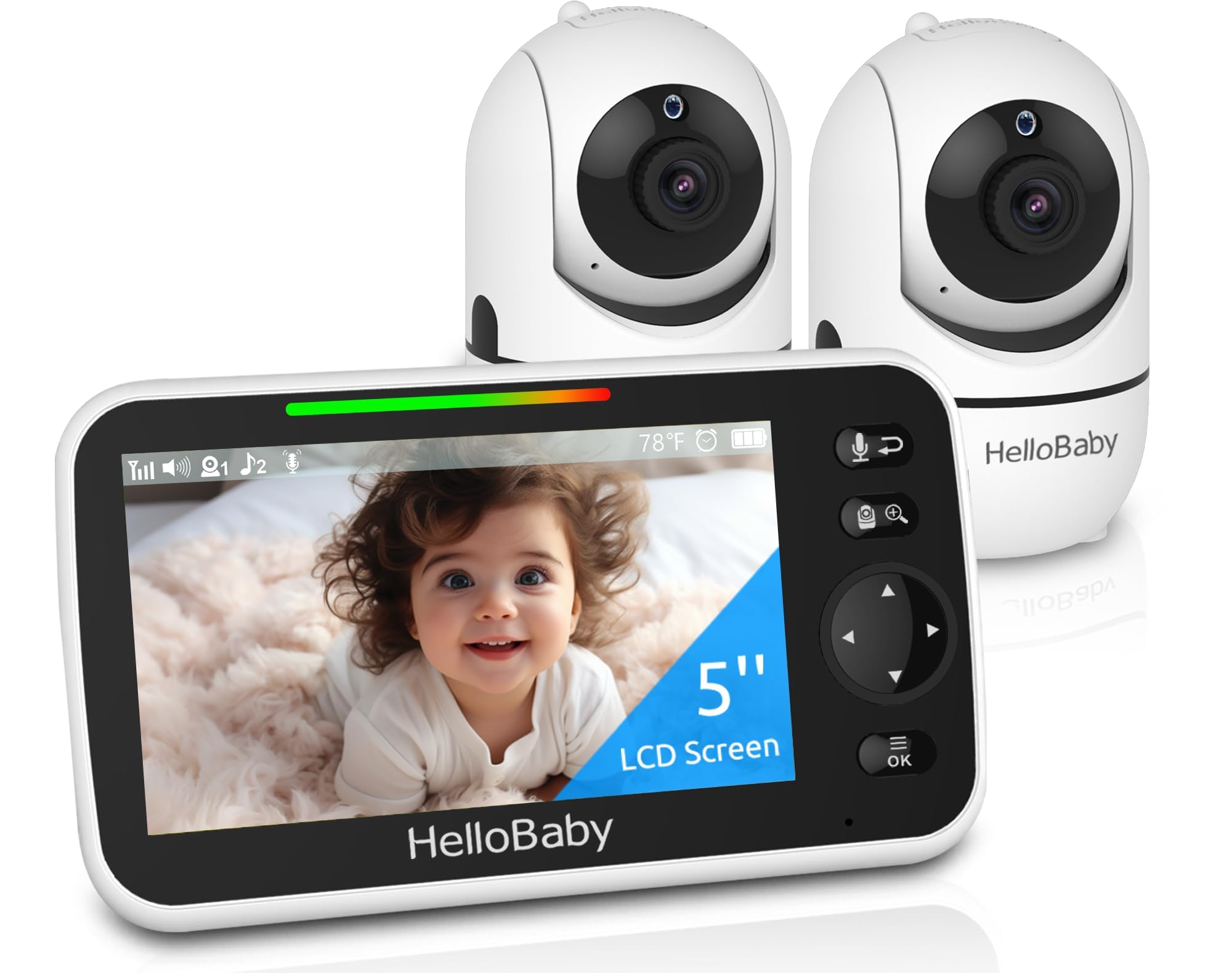
The HelloBaby HB6550-2 demonstrates what a well-equipped no-WiFi monitor offers: two pre-paired cameras with remote pan/tilt/zoom, a 5-inch IPS screen with one-tap room switching, 1000ft outdoor range, 30-hour battery, VOX mode, night vision, two-way talk, and eight lullabies. It supports up to four cameras and uses 2.4GHz FHSS for secure, low-latency transmission. At the latest price, it's positioned for parents who want multi-room coverage without network dependency.
Who Should Choose a No-WiFi Monitor
This technology suits parents who prioritize security and simplicity over smartphone integration. It's ideal if you live in an area with unreliable internet, prefer dedicated devices over apps, or want a monitor that grandparents and babysitters can use without instructions.
Who Should Skip It
If you want remote access from outside your home, cloud recording, or integration with smart home systems, a WiFi monitor is the better choice. No-WiFi models are purpose-built for in-home use only.
Related Buying Guides
- How to Monitor Your Baby Without WiFi or Cloud Accounts
- 3 Best Non-WiFi Baby Monitors with Long Battery Life in 2026
- VTech VM819 vs HelloBaby HB6550 vs HelloBaby HB6560: Which No-WiFi Baby Monitor is Right for You?
- VTech VM819 Baby Monitor Guide: No WiFi Setup for New Parents
- Best No-WiFi Baby Monitors for Privacy and Long Battery Life in 2026
- HelloBaby 6" IPS Video Baby Monitor FAQ: Is the 30-Hour Battery Worth It?