How to Choose Waterproof Labels for Bottles: A Buyer's Guide
Learn how to choose durable waterproof labels for bottles. Key features to look for, material quality, adhesive strength, and what works best for home and commercial use.
How to Choose the Right Waterproof Labels for Your Bottles
Whether you're organizing a home pantry, running a small business, or managing inventory in a warehouse, the right waterproof labels can save time and prevent labeling disasters. Standard paper labels fail when exposed to moisture, condensation, or handling. Choosing labels built to withstand water, oils, and frequent contact ensures your information stays readable and attached.
What to Look For in Waterproof Bottle Labels
- Material: Polypropylene or vinyl labels resist water, oils, and tearing better than paper alternatives.
- Adhesive type: Permanent adhesive ensures labels stay put on glass, plastic, and metal surfaces, even in humid or cold environments.
- Writeable surface: A smooth, writable finish allows you to use pens, markers, or thermal printers without smudging.
- Size and quantity: Consider your typical labeling volume. Rolls of 500 or more reduce reordering frequency for high-volume users.
- Application environment: If labels will be refrigerated, frozen, or exposed to cleaning chemicals, verify the material and adhesive can handle those conditions.
A Solid Option for General Use
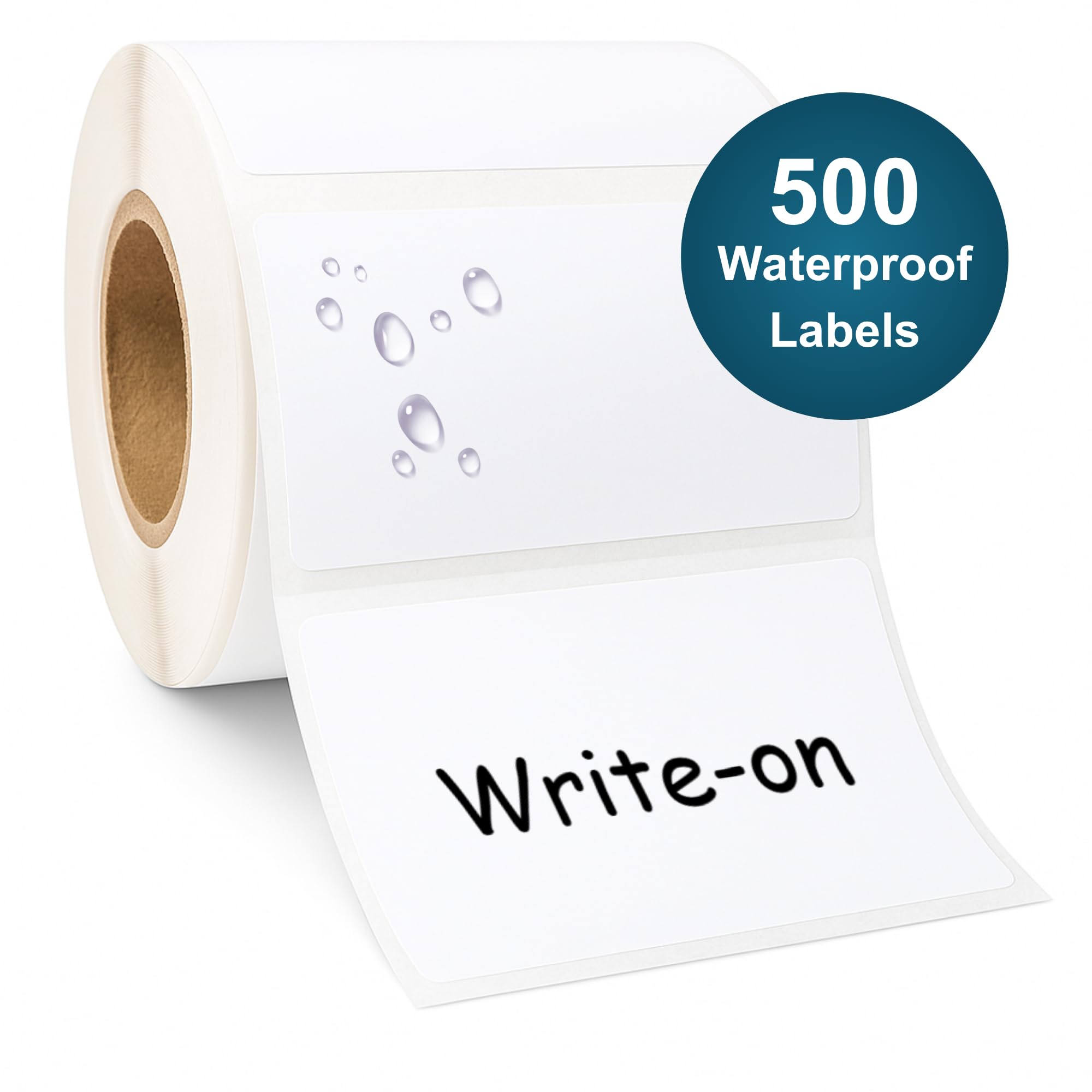
The Mermed Premium Blank Waterproof Labels offer a practical balance of durability and usability. These white polypropylene labels measure 70mm x 40mm and come in a 500-count roll, making them suitable for both home organization and light commercial use. The permanent adhesive sticks reliably to glass, plastic, and metal, while the writable surface accepts most pens and markers without bleeding.
At the latest price for 500 labels, the cost per label is reasonable for frequent labeling needs. The 4.3 out of 5 rating reflects consistent performance across kitchens, offices, and retail environments. Users appreciate the labels' resistance to moisture and handling, though some note that extremely rough surfaces may require extra pressure during application.
Who Should Consider These Labels
These labels work well for home cooks labeling pantry jars, small business owners marking product batches, teachers organizing classroom supplies, or warehouse staff tracking inventory. The writable surface and permanent bond handle everyday moisture exposure without peeling or fading.
Who Should Look Elsewhere
If you need labels for industrial dishwasher cycles, extreme cold storage, or outdoor weathering, verify compatibility with those specific conditions. For high-speed automated labeling systems, pre-printed or thermal transfer labels may be more efficient.
Common Mistake to Avoid
Don't assume all waterproof labels are writable with any pen. Some synthetic materials only accept specific inks or require thermal printing. Always test your preferred writing tool on a sample label before bulk application, especially if you're using alcohol-based markers or ballpoint pens.
Related Buying Guides
- How to Keep Pantry and Storage Labels from Peeling or Smudging
- How to Choose Waterproof Labels for Bottles: Material, Adhesive & Size Guide
- Mermed Waterproof Bottle Labels Review: 500-Count Writable Polypropylene Stickers for Home and Office
- What Makes Waterproof Labels Actually Waterproof? Understanding Polypropylene Bottle Labels
- Cup Holder Upgrades for Parents Who Live in Their Car
- Best Baby Feeder for Mess-Free Self-Feeding Practice