How to Help Your Baby Learn to Walk with a Montessori Push Walker
Learn how to safely introduce a push walker to help your baby develop walking skills. Step-by-step guide with tips for choosing the right Montessori-style walker.
How to Help Your Baby Learn to Walk with a Push Walker
Watching your baby take their first steps is exciting, but the journey from crawling to walking can feel uncertain. A well-designed push walker gives babies the support they need to practice balance and build confidence during this important milestone.
Push walkers work best when introduced at the right time and used safely. Here's how to help your little one learn to walk with a Montessori-style wooden walker.
Step-by-Step Guide
1. Wait Until Your Baby Can Pull Up
Don't introduce a walker too early. Your baby should be able to pull themselves up to standing and cruise along furniture before using a push walker. This usually happens between 9 and 12 months.
2. Choose a Stable Wooden Walker
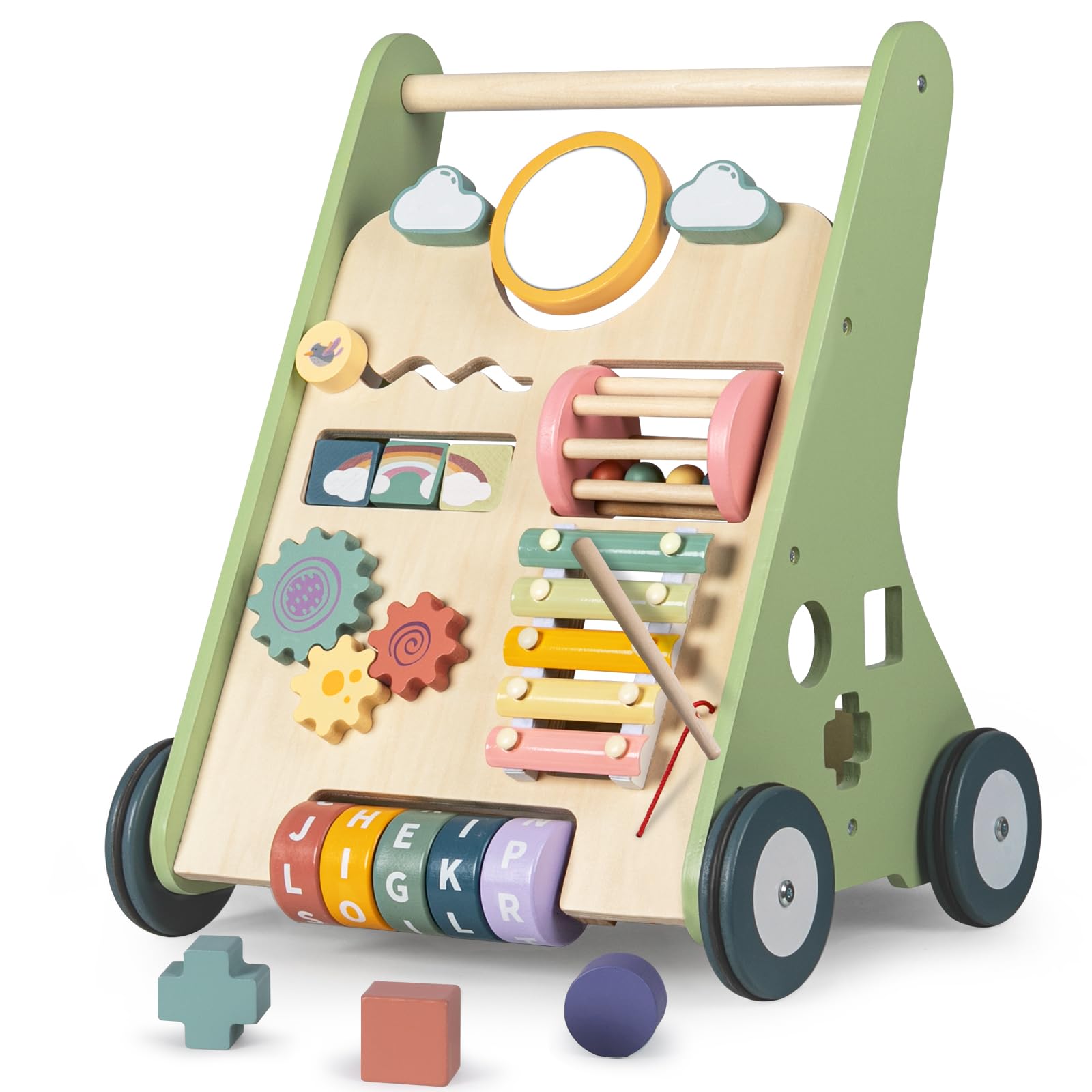
Look for a walker with a wide base and adjustable resistance. The Bautia Wooden Baby Walker features natural wood construction with smooth edges and a sturdy design that won't tip easily. The interactive panel includes a xylophone, letter wheel, and tracking games to keep babies engaged while they practice.
3. Adjust the Resistance
Start with higher resistance so the walker moves slowly. As your baby gains confidence, you can reduce resistance to allow faster movement. This prevents the walker from rolling away too quickly and causing falls.
4. Clear a Safe Practice Space
Remove obstacles, secure rugs, and create a flat surface for practice. Stay close during the first few sessions to provide reassurance and catch any stumbles.
5. Keep Sessions Short
Let your baby use the walker for 10-15 minutes at a time. Too much reliance on a walker can delay independent walking, so balance walker time with floor play and free standing practice.
What to Check Before Buying
- Stability: Wide base and weight distribution that prevents tipping
- Wheel resistance: Adjustable speed control for different skill levels
- Height: Handle bar should be at your baby's chest level when standing
- Materials: Smooth, non-toxic wood without sharp edges
- Extra features: Activity panels that develop fine motor skills alongside walking practice
The Bautia walker checks all these boxes and includes multiple activities that work on hand-eye coordination while your baby builds leg strength. It's designed for babies 6-12 months who are learning to walk.
Related Buying Guides
- Is the Bautia Wooden Baby Walker Worth It? Common Questions Answered
- Best Wooden Baby Walker for Learning to Walk: Bautia Montessori Activity Walker Guide
- How to Choose a Safe Montessori Baby Walker for Early Walkers
- Best Baby Walkers Under $70: Top 3 Picks for Learning to Walk in 2026
- 3 Best Baby Walkers for Early Development: Wooden, Electronic & Convertible Options Compared
- Best Natural Wood Alternative to Plastic Baby Walkers for 1 Year Olds