Best Natural Wood Alternative to Plastic Baby Walkers for 1 Year Olds
Looking for a healthier alternative to plastic baby walkers? The Bautia Wooden Baby Walker offers natural materials, multiple activities, and safe design for babies learning to walk.
Why Choose a Wooden Walker Over Plastic?
If you're concerned about plastic toys or want a more natural, durable option for your baby's first steps, a wooden walker offers a thoughtful alternative. Traditional plastic walkers can feel flimsy, contain questionable materials, and often lack the sensory richness that natural wood provides. A wooden push walker combines sturdy construction with classic Montessori design principles, giving babies a safer, more engaging way to build confidence as they learn to walk.
What Makes a Good Wooden Walker Alternative
- Natural materials: Solid wood construction with smooth, splinter-free edges
- Stability: Weighted base that won't tip easily as babies push
- Developmental value: Built-in activities that support fine motor skills and cognition
- Age-appropriate design: Suitable for babies 6-12 months and toddlers learning to walk
- Easy maintenance: Simple to clean without electronic components that can break
The Bautia Wooden Baby Walker: A Complete Activity Center
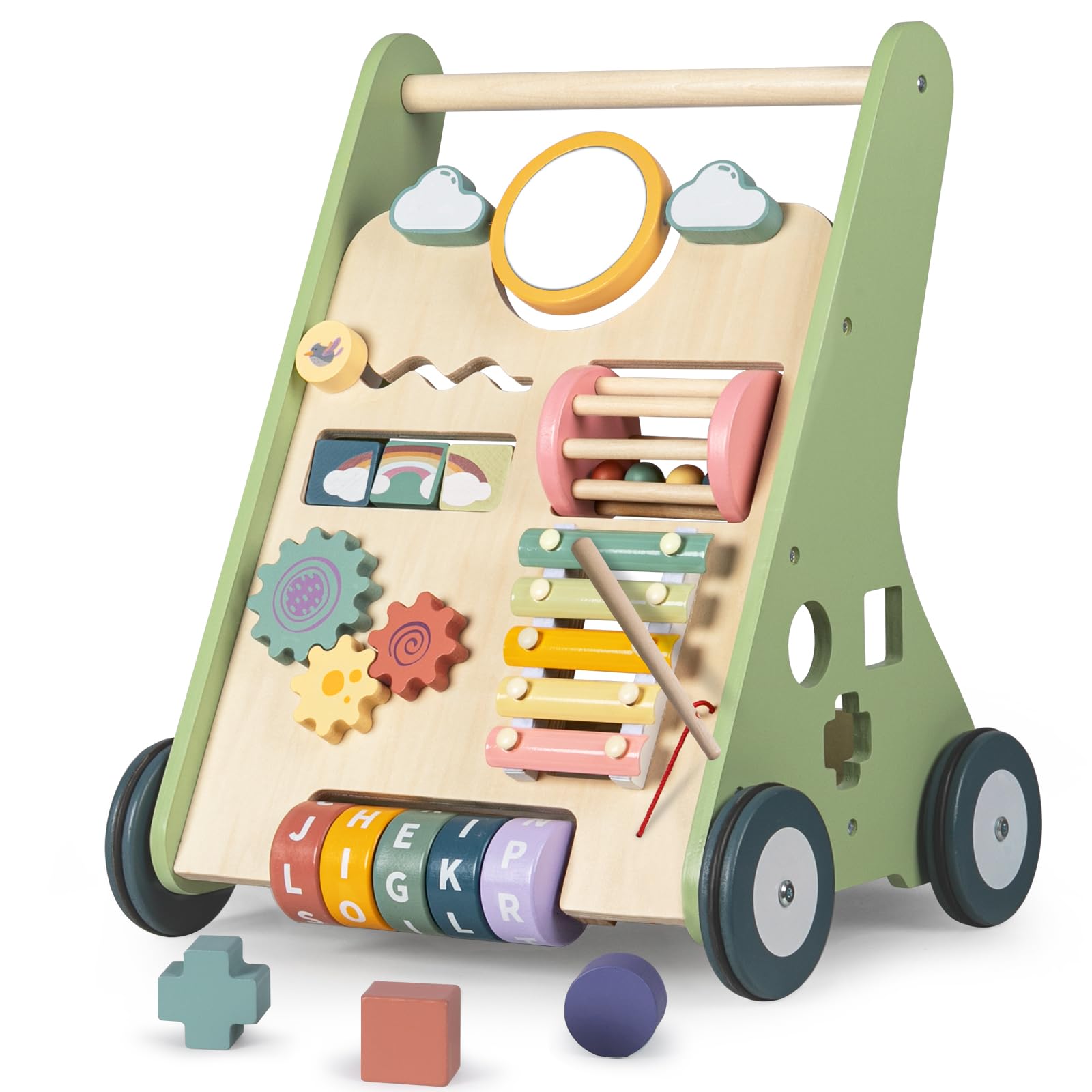
The Bautia Wooden Baby Walker goes beyond basic push functionality. This Montessori-inspired walker includes an interactive activity panel with a rolling letter wheel, xylophone, flip board, and tracking games. While your child practices walking, they're also working on hand-eye coordination and early cognitive skills. The natural wood construction offers smooth edges and a sturdy frame designed specifically for babies aged 6-12 months.
Unlike thin plastic alternatives that can crack or wear quickly, this wooden walker is built to last through multiple children. The activity panel detaches, so it can be used for floor play before your baby is ready to walk. At the latest price, it delivers solid value as both a walker and a standalone activity toy.
What You Gain
You get a chemical-free, sustainable toy made from natural materials. The wooden construction is heavier and more stable than plastic, reducing tip-over risk. The multi-activity design keeps babies engaged longer, and the classic aesthetic fits most home decor better than bright plastic.
What You Give Up
Wooden walkers are heavier, which makes them less portable. There are no lights or electronic sounds—this is a screen-free, battery-free toy. The price point is higher than basic plastic push toys, though still reasonable for the quality.
Who Should Choose This Walker
This walker is ideal for parents who prioritize natural materials, Montessori principles, or simply want a longer-lasting alternative to plastic. It works well for babies starting to pull up and cruise, typically between 9-15 months, and the activities grow with them.
Who Should Skip It
If you need a lightweight, portable walker for travel, or if your child responds best to electronic sounds and lights, a plastic option might suit you better. This walker also requires more floor space due to its solid build.
Related Buying Guides
- Is the Bautia Wooden Baby Walker Worth It? Common Questions Answered
- Best Wooden Baby Walker for Learning to Walk: Bautia Montessori Activity Walker Guide
- How to Choose a Safe Montessori Baby Walker for Early Walkers
- Best Baby Walkers Under $70: Top 3 Picks for Learning to Walk in 2026
- How to Help Your Baby Learn to Walk with a Montessori Push Walker
- 3 Best Baby Walkers for Early Development: Wooden, Electronic & Convertible Options Compared